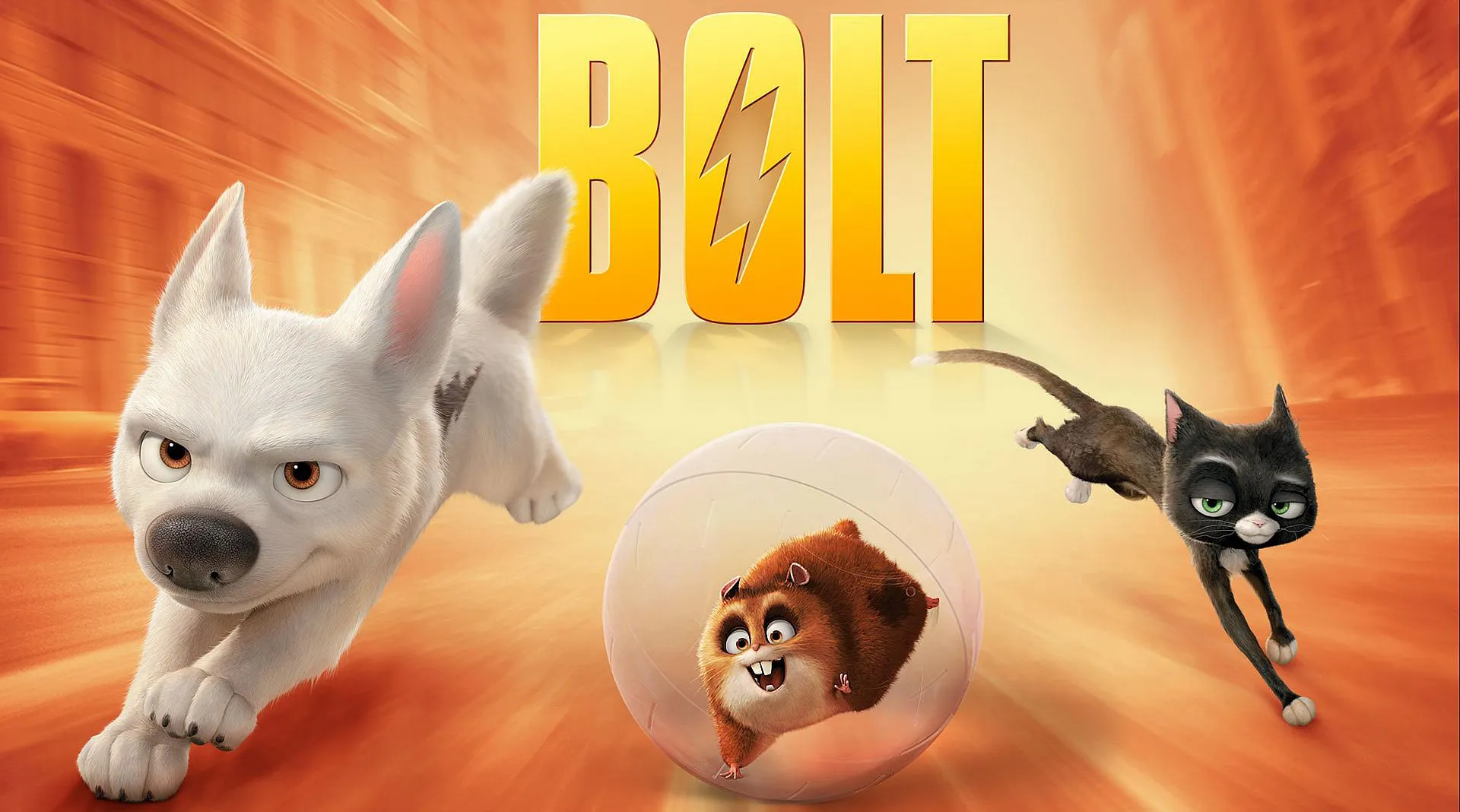
marydilip.info – Released in 2008 by Walt Disney Animation Studios, Bolt is a heartwarming animated film that combines adventure, comedy, and drama to tell the story of a dog who embarks on a journey of self-discovery. Directed by Chris Williams and Byron Howard, Bolt marked a significant moment for Disney Animation as the studio was transitioning into the era of CGI-animated films. It was also the first Disney animated feature to be executive produced by John Lasseter, who had recently become Chief Creative Officer of Disney and Pixar Animation Studios.
Bolt is notable for its blend of action-packed sequences and emotional depth, with a cast of memorable characters and an intriguing premise that explores the themes of identity, loyalty, and the power of friendship. The movie became a moderate box office success and received positive reviews from critics, particularly for its animation, voice performances, and heartwarming narrative.
In this article, we’ll explore the background, plot, characters, themes, and legacy of Bolt, delving into what made this film an important and beloved entry in Disney’s animated filmography.
The Creation of Bolt
A Film in Transition
Bolt came at a time when Disney was undergoing significant changes in its approach to animated filmmaking. The early 2000s had been a challenging period for the studio, with a series of box office disappointments and an industry-wide shift toward CGI animation. Disney was transitioning from its traditional hand-drawn animation style to fully embrace CGI, and Bolt was a pivotal project in this process.
The film originally began development under the title American Dog, directed by Chris Sanders, who was known for his work on Lilo & Stitch. However, creative differences led to Sanders being replaced, and the film underwent significant retooling under the leadership of Chris Williams and Byron Howard. The story was revamped, the animation style was refined, and the focus shifted toward creating a more heartfelt and character-driven narrative.
John Lasseter, who had recently joined Disney as Chief Creative Officer following Disney’s acquisition of Pixar, played a crucial role in guiding the project toward its final form. Lasseter’s influence can be seen in the film’s focus on emotional storytelling and character development, traits that were hallmarks of Pixar’s success. With Bolt, Disney sought to create a film that would resonate with audiences on a deeper emotional level while still delivering the action, humor, and spectacle that fans had come to expect from animated features.
Advancements in Animation
Bolt also showcased advancements in CGI animation technology, with the animation team making great strides in creating realistic textures, lighting, and character expressions. The film’s animators paid close attention to the physicality of Bolt as a dog, ensuring that his movements and expressions felt authentic while still allowing for the exaggerated, cartoonish style that Disney was known for.
One of the most notable aspects of the animation in Bolt is the way the film plays with different visual styles to distinguish between the “real world” and the fictional world of the television show that Bolt stars in. The action scenes from Bolt’s fictional TV show are rendered with high-intensity, over-the-top special effects, while the real world is portrayed with more grounded and naturalistic animation. This visual contrast helps to emphasize Bolt’s confusion as he navigates between the world he believes to be real and the reality he must come to terms with.
The Plot of Bolt
The Life of a Superhero Dog
The film follows the story of Bolt (voiced by John Travolta), a dog who has spent his entire life living on the set of a popular action-packed television series, where he believes he possesses superpowers such as super strength, laser vision, and lightning-fast speed. In the show, Bolt is tasked with protecting his beloved owner, Penny (voiced by Miley Cyrus), from a variety of dangerous villains. The catch is that Bolt is unaware that he is an actor, and he genuinely believes that everything in his life—his superpowers, the threats to Penny, and his heroic missions—are real.
Because of this carefully constructed illusion, Bolt lives in a state of constant high alert, always ready to protect Penny and save the day. However, his life is turned upside down when, due to a misunderstanding, he believes Penny has been kidnapped by the show’s villain, Dr. Calico (voiced by Malcolm McDowell). Determined to rescue her, Bolt accidentally gets shipped from Hollywood to New York City.
A Journey of Self-Discovery
Once in New York, Bolt begins his quest to find Penny, convinced that his superpowers will help him track her down. However, as Bolt ventures through the unfamiliar city, he quickly discovers that his powers are not working. In fact, he begins to realize that he might not have any superpowers at all.
As Bolt struggles to make sense of his new reality, he encounters two unlikely companions who join him on his journey: a cynical and street-smart alley cat named Mittens (voiced by Susie Essman) and a hyperactive hamster named Rhino (voiced by Mark Walton), who happens to be an obsessive fan of Bolt’s TV show. With their help, Bolt slowly learns the truth about his life as an actor and begins to come to terms with the fact that he is not the superhero he always believed himself to be.
The Road to Home
Throughout their adventure, Bolt, Mittens, and Rhino form a close bond as they travel across the country in search of Penny. Along the way, Bolt experiences life outside the controlled environment of the TV set for the first time, learning valuable lessons about friendship, loyalty, and self-worth.
The film’s climax takes place back in Hollywood, where Bolt finally confronts the reality of his life. He realizes that while he may not have superpowers, his love for Penny and his determination to protect her are just as powerful. In the end, Bolt proves that true heroism comes from the heart, not from superhuman abilities.
The Characters of Bolt
Bolt
Bolt is the film’s titular character, a white American Shepherd dog who begins the story as a confused and sheltered canine living in the artificial world of a TV show. His journey from believing he is a superhero to realizing he is an ordinary dog is the emotional core of the film. Bolt’s character arc is about learning to accept himself for who he truly is, rather than who he thought he was. Voiced by John Travolta, Bolt is both endearing and relatable, as he transitions from a naïve hero to a dog who understands the true meaning of courage and love.
Mittens
Mittens, voiced by Susie Essman, is a sarcastic and jaded alley cat who becomes Bolt’s reluctant companion on his journey. Having lived a hard life on the streets, Mittens is initially skeptical of Bolt’s grandiose beliefs and superpowers. However, as she gets to know him, Mittens grows to care for Bolt and becomes an important figure in his realization of the truth. Her character represents resilience and survival, and her relationship with Bolt highlights the importance of trust and friendship.
Rhino
Rhino, voiced by Mark Walton, is a fan-favorite character in the film. He is an excitable and fearless hamster who lives in a plastic ball and idolizes Bolt, having watched every episode of his TV show. Rhino’s boundless enthusiasm and unshakable belief in Bolt’s heroism provide much of the film’s comic relief. Despite his small size, Rhino has an enormous sense of adventure and bravery, and his unwavering loyalty to Bolt serves as a reminder that even the most unlikely individuals can be heroes in their own way.
Penny
Penny, voiced by Miley Cyrus, is Bolt’s loving owner and the young star of the TV show. Throughout the film, Penny’s bond with Bolt is a central element of the story, as Bolt’s devotion to her drives much of his journey. Penny genuinely cares for Bolt, and by the film’s conclusion, their relationship becomes one of mutual trust and love, free from the artificial constraints of the TV show. Penny’s character symbolizes the real emotional connection that Bolt seeks, as opposed to the scripted drama of the TV world.
The Villain: Dr. Calico
Dr. Calico, voiced by Malcolm McDowell, is the villain of the fictional TV show within the movie. Although he plays a significant role in the action sequences at the beginning of the film, he is not a real threat to Bolt or Penny. Dr. Calico’s over-the-top villainy serves as a contrast to the real-world challenges Bolt faces as he embarks on his journey of self-discovery.
Themes in Bolt
Identity and Self-Discovery
One of the central themes of Bolt is the exploration of identity and self-discovery. Bolt’s entire life has been defined by the fictional narrative of the TV show, and he believes that his worth comes from his superpowers. Over the course of the film, Bolt learns that true heroism is not about physical strength or special abilities, but about loyalty, love, and the willingness to protect those who matter most. His journey reflects the universal struggle to define one’s identity and find purpose beyond external labels.
The Power of Friendship
Friendship is another key theme in Bolt. The unlikely bond between Bolt, Mittens, and Rhino highlights the importance of companionship and loyalty. Mittens, in particular, teaches Bolt valuable lessons about the world outside the TV show, helping him navigate the challenges of reality. Meanwhile, Rhino’s unwavering belief in Bolt’s heroism serves as a source of encouragement, reminding Bolt that true courage comes from within. The film emphasizes that no one can go through life’s challenges alone, and that the support of friends is essential in times of difficulty.
The Line Between Reality and Fiction
Bolt plays with the idea of the blurred line between reality and fiction. For Bolt, the distinction between the TV show and the real world is initially nonexistent, leading to his confusion and frustration when his “superpowers” fail to work in the real world. The film explores the consequences of living in a fabricated reality and the importance of understanding and accepting the truth. By the end of the film, Bolt comes to terms with the fact that he is not a superhero, but this realization does not diminish his sense of purpose or his love for Penny.
Heroism
The concept of heroism is central to Bolt. Initially, Bolt believes that being a hero means having superpowers and performing extraordinary feats of strength. However, as the film progresses, Bolt learns that true heroism lies in love, loyalty, and the willingness to protect others, even in the face of danger. The film ultimately suggests that anyone can be a hero, regardless of their abilities, as long as they are motivated by compassion and courage.
Legacy and Reception
Upon its release, Bolt was praised for its animation, voice acting, and heartwarming story. John Travolta’s performance as Bolt, Miley Cyrus as Penny, and Susie Essman as Mittens were particularly lauded for bringing emotional depth and humor to their roles.
While Bolt was not a massive box office hit compared to some of Disney’s later films, it performed well enough to be considered a success. It grossed over $310 million worldwide and earned an Academy Award nomination for Best Animated Feature, though it ultimately lost to Pixar’s WALL-E. Nonetheless, Bolt marked an important step in Disney’s revival, paving the way for future successes like Tangled and Frozen.
In the years since its release, Bolt has gained a devoted fanbase and is remembered fondly for its heartwarming message and memorable characters. It represents a transitional moment in Disney Animation’s history, bridging the gap between the studio’s traditional hand-drawn films and its modern CGI masterpieces.
Conclusion
Bolt (2008) is a delightful and emotionally resonant film that explores themes of identity, friendship, and heroism. Through the journey of a dog who believed he was a superhero, the film reminds us that true courage comes from within, and that the bonds we share with others are more powerful than any superpower. With its charming characters, stunning animation, and heartfelt message, Bolt remains a beloved entry in Disney’s animated filmography and continues to inspire audiences of all ages.
