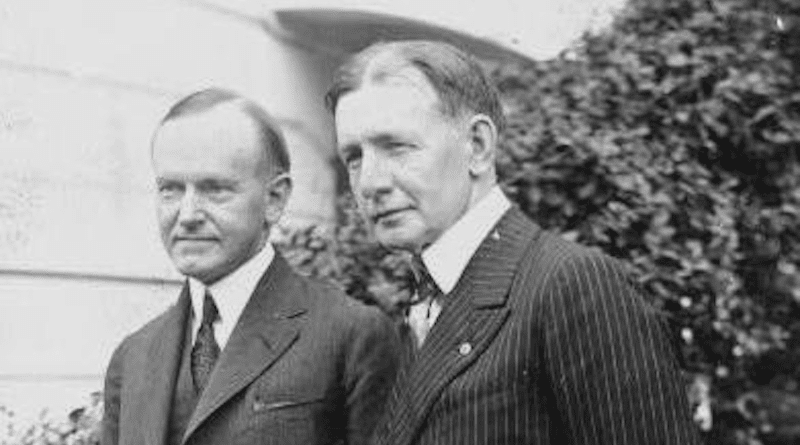
marydilip.info – Calvin Coolidge, the 30th President of the United States, served during one of the most economically prosperous periods in the nation’s history: the Roaring Twenties. Known for his quiet demeanor, fiscal conservatism, and limited government approach, Coolidge’s leadership is often regarded as the epitome of economic prosperity and a shining example of the American Dream. His presidency saw robust economic growth, rising standards of living, and the flourishing of American industry and business. Coolidge’s belief in the power of the free market and individual initiative, combined with a series of pro-business policies, helped catalyze a decade of unparalleled wealth and opportunity.
However, Coolidge’s presidency was not simply about wealth and material success. It was also about the ideals that underpin the American Dream: individual freedom, hard work, and opportunity for all. His leadership during the 1920s helped foster an environment where Americans could pursue their own dreams and aspirations, and his policies encouraged a climate of economic growth that empowered citizens to achieve greater success. The question remains, though: to what extent did Coolidge’s policies help realize the American Dream for all Americans, and what were the long-term impacts of his administration on the nation’s economic landscape?
This article will explore how Coolidge’s presidency directly contributed to the economic prosperity of the 1920s, the role of his policies in expanding the American Dream, and the broader implications of his leadership in shaping modern America.
The Roaring Twenties: The Context for Economic Prosperity
Before examining Coolidge’s role in the economic prosperity of the 1920s, it is essential to understand the broader context of the decade. The period following World War I was marked by a desire for stability and economic growth after the disruption caused by the war and the 1918 influenza pandemic. The early 1920s witnessed a period of adjustment, as Americans sought to return to normalcy, a phrase famously coined by Warren G. Harding, Coolidge’s predecessor. This desire for economic stability and growth was met with policies that fostered both industrial innovation and financial investment.
The 1920s was also an era of significant technological advancement. The automobile industry exploded, with Henry Ford’s Model T becoming a symbol of modernity and American ingenuity. The rise of electricity, new household appliances, and radio broadcasting changed the daily lives of Americans and gave rise to new industries and job opportunities. The economic growth that accompanied these innovations expanded the horizons of what was possible for the average citizen, providing greater opportunities for people to improve their living standards.
The business world also thrived, as industrial production soared and large corporations grew. The stock market boomed, with many Americans becoming involved in investing, often through margin buying, which allowed people to purchase stock with borrowed money. This growing sense of prosperity, coupled with the increasing availability of consumer goods, helped reinforce the notion of the American Dream—where anyone, regardless of background or class, could succeed if they worked hard enough.
Coolidge’s administration took office during this dynamic period, and his leadership played a pivotal role in shaping the economic conditions that allowed the American Dream to flourish.
Coolidge’s Economic Policies: Foundations of Prosperity
At the heart of Coolidge’s economic policies was a commitment to limited government, fiscal conservatism, and support for business. He believed that a free-market economy, unencumbered by excessive regulation and taxation, would allow Americans to thrive. His administration set the stage for a decade of prosperity that saw the country experience its most robust economic growth since the post-Civil War era.
Fiscal Conservatism: Tax Cuts and Balanced Budgets
One of Coolidge’s most significant economic policies was his commitment to fiscal conservatism. He believed that the federal government should not spend more than it took in and that high taxes stifled economic growth. In a time when many policymakers advocated for increased government spending, Coolidge remained steadfast in his belief that lower taxes would stimulate business and allow individuals to retain more of their earnings, thereby contributing to greater economic prosperity.
Coolidge worked closely with Treasury Secretary Andrew Mellon to implement a series of tax cuts, particularly for the wealthy and for businesses. The Revenue Acts of 1924, 1926, and 1928 dramatically reduced the top income tax rates, with the highest rate dropping from 73% in 1921 to just 25% by 1929. Coolidge’s tax cuts were designed to encourage investment, entrepreneurship, and the expansion of industry. By leaving more money in the hands of business leaders and individuals, Coolidge believed that wealth would “trickle down” through the economy, benefiting everyone from the factory worker to the small business owner.
These tax cuts were coupled with efforts to reduce government spending and eliminate wasteful programs. The result was a balanced federal budget and a reduction in the national debt. Coolidge’s administration succeeded in cutting government spending by around 50%, ensuring that the government was not crowding out private investment and economic activity.
While the tax cuts were controversial, especially for critics who argued that they disproportionately benefited the wealthy, they were instrumental in the economic growth that defined the 1920s. The rise of business activity, coupled with the expansion of consumer goods and the stock market boom, provided a fertile ground for the realization of the American Dream for many Americans.
Support for Business and Innovation
In addition to his tax policies, Coolidge was a staunch advocate for business. He believed that a thriving business sector was the key to a prosperous economy and that government interference should be minimal. Coolidge’s pro-business stance was not simply about supporting big corporations, but also about creating an environment in which businesses of all sizes could grow and flourish.
Under Coolidge’s leadership, the United States saw unprecedented industrial growth. The automobile industry became a symbol of American innovation, as Ford’s mass production techniques revolutionized manufacturing. The expansion of the oil, steel, and electrical industries helped create millions of jobs and laid the foundation for further economic development. This growth extended beyond industry to encompass the expansion of the banking sector, the stock market, and consumer goods, all of which helped fuel the nation’s economic boom.
Coolidge’s belief in the power of the free market to drive innovation and prosperity was evident in his reluctance to impose heavy regulations on businesses. Instead, he emphasized the importance of competition and individual initiative in fostering progress. For Coolidge, government intervention in business should be limited to protecting the public interest—such as regulating monopolies and ensuring that industries adhered to basic standards of fairness. This approach allowed businesses to flourish without being bogged down by excessive regulation, and in turn, it created jobs and opportunities for ordinary Americans.
Encouraging Consumer Culture
Coolidge’s economic policies also indirectly encouraged the growth of consumer culture. The rise of mass production, the automobile, and the advent of new household appliances made goods more affordable and accessible to a larger segment of the population. By supporting policies that allowed for increased industrial output and expanding access to credit, Coolidge’s administration played a role in fostering a consumer-driven economy.
The growing availability of consumer goods helped drive demand and contributed to the continued economic expansion of the 1920s. Americans began to purchase not just necessities but also luxury items, from cars to radios to home appliances. This new consumer culture helped realize the American Dream in a more tangible sense, as individuals who had previously lacked access to such goods were now able to purchase them and enjoy a higher standard of living.
The Stock Market Boom and the Rise of Middle-Class Wealth
One of the defining features of the 1920s was the explosion of stock market speculation, which allowed many Americans, particularly the middle class, to invest in companies and experience the kind of wealth once reserved for the elite. With access to credit and an increasing sense of financial optimism, people from all walks of life could participate in the stock market and benefit from its rise.
The stock market boom, while ultimately unsustainable, was a direct result of Coolidge’s pro-business policies and the overall economic environment he fostered. As the stock market soared, many Americans felt a sense of empowerment and financial possibility. For those who successfully invested in stocks, the market seemed to offer an unparalleled opportunity to build wealth. Though the crash of 1929 would later erase much of this wealth, the experience demonstrated the potential of financial success that many Americans had never before dreamed possible.
The Limits of Prosperity: Who Was Left Behind?
Despite the incredible economic growth of the 1920s, it is essential to recognize that not all Americans benefited equally from Coolidge’s policies. While business leaders and wealthy individuals prospered, many working-class families, particularly those in agriculture, faced significant challenges. Farmers, who were already struggling with overproduction and falling crop prices, found little relief from Coolidge’s economic policies. The agricultural sector, which had been a cornerstone of the American economy, did not see the same growth as industrial sectors, and many farmers remained trapped in poverty.
Additionally, the boom of the 1920s disproportionately benefited the wealthy, while many Americans, particularly African Americans, immigrants, and marginalized communities, continued to face systemic barriers to economic success. While Coolidge’s policies did foster an environment of opportunity, they did not necessarily address the deep racial and class inequalities that persisted in the nation. The American Dream, as envisioned by Coolidge, was still more attainable for some than for others.
Coolidge’s Legacy: A Prosperous, But Unequal, America
Calvin Coolidge’s presidency represents a unique period in American history—a time when the nation experienced immense economic growth, innovation, and prosperity. His commitment to limited government, fiscal discipline, and support for business played a central role in fostering the conditions that allowed the American Dream to thrive for many. However, the benefits of Coolidge’s policies were not equally distributed, and his hands-off approach to regulation and economic management ultimately left the nation vulnerable to the excesses of speculation, particularly in the stock market.
Despite the limits of prosperity, Coolidge’s presidency remains a defining moment in the history of the American Dream. His policies created an environment where individuals could dream big and achieve success, provided they had access to the right opportunities. Coolidge’s legacy is a testament to the power of the free market and individual initiative, and while his administration did not succeed in addressing all the social and economic inequalities of the time, it undeniably shaped the future of American capitalism and the pursuit of the American Dream.
In the end, Calvin Coolidge’s legacy is that of a leader who believed in the power of limited government and individual opportunity to shape the future of the nation. His policies, which helped define the economic boom of the 1920s, continue to resonate in today’s debates over the role of government in the economy and the ability of individuals to achieve success. Coolidge’s vision of an America where the pursuit of happiness was tied to personal effort and freedom remains an enduring ideal of the American Dream.