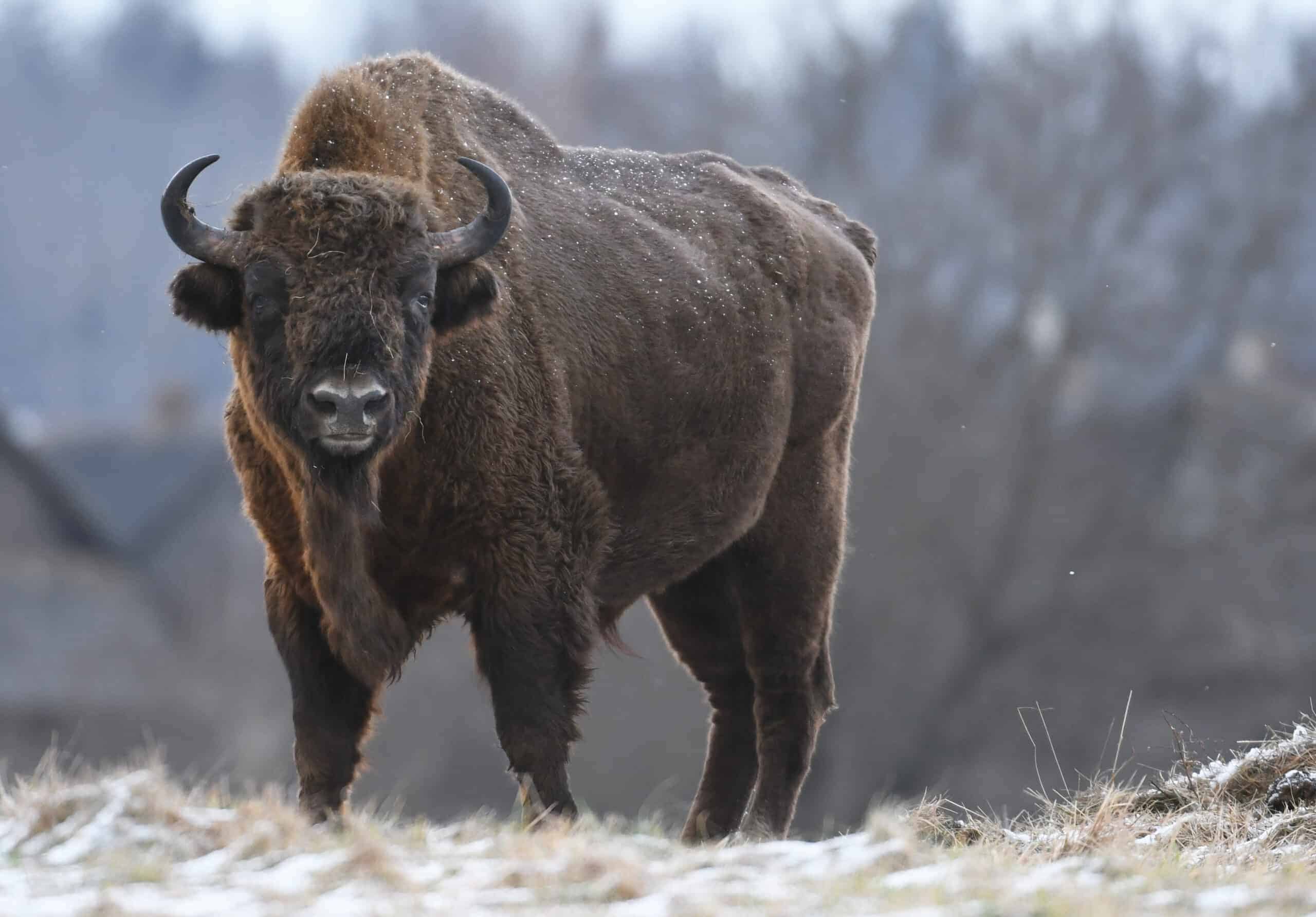
marydilip.info – The European bison (Bison bonasus), also known as the wisent, stands as a powerful symbol of successful wildlife conservation. Once on the brink of extinction in the early 20th century, this majestic herbivore, Europe’s largest land mammal, has made a remarkable recovery thanks to dedicated conservation efforts. This article explores the fascinating journey of the European bison, from its historical dominance to its near demise and subsequent resurgence.
Physical Characteristics: A Powerful Forest Dweller
Slightly smaller and lighter than its North American cousin, the American bison, the European bison is nonetheless a formidable animal, well-adapted to its forest habitat.
- Size and Stature: Adult bulls can weigh up to 900 kg (2,000 lbs) and reach a shoulder height of up to 1.9 meters (6.2 ft). Cows are smaller, typically weighing around 600 kg (1,300 lbs).
- Distinctive Features: They possess a dark brown coat that thickens in winter, a prominent shoulder hump, and relatively short, curved horns. Their build is more elongated and less stocky than the American bison.
- Adaptations for Browsing: Unlike the American bison, which primarily grazes on grasses, the European bison is a mixed feeder, browsing on leaves, twigs, and bark of trees and shrubs, as well as grazing on grasses and herbs. This dietary flexibility allows them to thrive in forested environments.
Behavior and Social Structure: A Complex Social Life
European bison are social animals, exhibiting complex social structures and behaviors.
- Herd Dynamics: They live in herds typically composed of cows, calves, and younger bulls. Older bulls often live solitary lives or form small bachelor groups.
- Leadership and Hierarchy: Herds are led by an experienced adult cow, who guides the group’s movements and activities. A dominance hierarchy exists within the herd, influencing access to resources and breeding opportunities.
- Seasonal Behavior: Their behavior varies with the seasons. During the breeding season (rut) in late summer and autumn, bulls engage in competitive displays to establish dominance. Calves are usually born in the spring.
Ecology and Habitat: Shaping the Forest Ecosystem
The European bison plays a crucial role in shaping forest ecosystems.
- Habitat Preferences: They prefer mixed deciduous and coniferous forests with access to open meadows and clearings for grazing.
- Ecological Impact: Their browsing and grazing influence forest structure, creating gaps in the canopy that allow sunlight to reach the forest floor, promoting plant diversity. They also contribute to seed dispersal and nutrient cycling.
Historical Decline and Near Extinction: A Loss of a Continent’s Heritage
The European bison once roamed across much of Europe, from the Iberian Peninsula to Siberia. However, a combination of factors led to its near extinction.
- Overhunting: Centuries of overhunting for meat and hides significantly reduced their numbers.
- Habitat Loss and Fragmentation: Deforestation for agriculture, timber production, and human settlement further fragmented their habitat, isolating populations and limiting their ability to thrive.
- War and Conflict: World War I proved to be the final blow, with widespread hunting and disruption of conservation efforts leading to the extinction of the European bison in the wild by 1927.
Captive Breeding and Reintroduction: A Beacon of Hope
The survival of the European bison is a testament to the power of dedicated conservation efforts.
- The Bialowieza Pedigree Book: A crucial step in the recovery of the species was the establishment of the Bialowieza Pedigree Book in 1923. This meticulously documented the ancestry of all remaining captive bison, allowing for careful breeding to minimize inbreeding.
- Reintroduction Programs: In the 1950s, reintroduction programs began in the Bialowieza Forest in Poland and Belarus, the bison’s last natural stronghold. These efforts were gradually expanded to other suitable habitats across Europe.
Modern Status and Conservation Challenges: A Continuing Journey
Today, the European bison population has rebounded to over 7,000 individuals, with the majority living in free-ranging herds.
- Wild and Semi-Wild Populations: Free-ranging herds now exist in various countries across Europe, including Poland, Belarus, Russia, Lithuania, Germany, Romania, and others.
- Genetic Management: Maintaining genetic diversity remains a key challenge. Careful monitoring and management of the population are essential to prevent inbreeding and ensure the long-term health of the species.
- Habitat Connectivity: Connecting fragmented habitats is crucial to allow for natural dispersal and gene flow between populations.
- Human-Wildlife Conflict: As bison populations expand, there is a potential for conflict with human activities, such as agriculture and forestry. Managing these conflicts is important for ensuring the continued success of conservation efforts.
- Disease Management: Monitoring and managing diseases within bison populations is another ongoing challenge.
Subspecies and Genetic Heritage: Two Distinct Lineages
Historically, there were two distinct subspecies of European bison: the lowland bison (Bison bonasus bonasus) and the Caucasian bison (Bison bonasus caucasicus). Only the lowland bison survived in captivity. However, within the lowland lineage, there are two distinct lines: the lowland line (pure B. b. bonasus) and the lowland-Caucasian line, which carries some genetic influence from the extinct Caucasian bison.
Conclusion: A Symbol of Conservation Success and a Reminder of the Importance of Biodiversity
The European bison’s remarkable recovery is a powerful example of what can be achieved through dedicated conservation efforts. It is a testament to the importance of preserving biodiversity and a reminder that even species on the brink of extinction can be brought back from the brink. Continued monitoring, management, and international cooperation are essential to ensure the long-term survival of this majestic animal and its continued role in European ecosystems.
