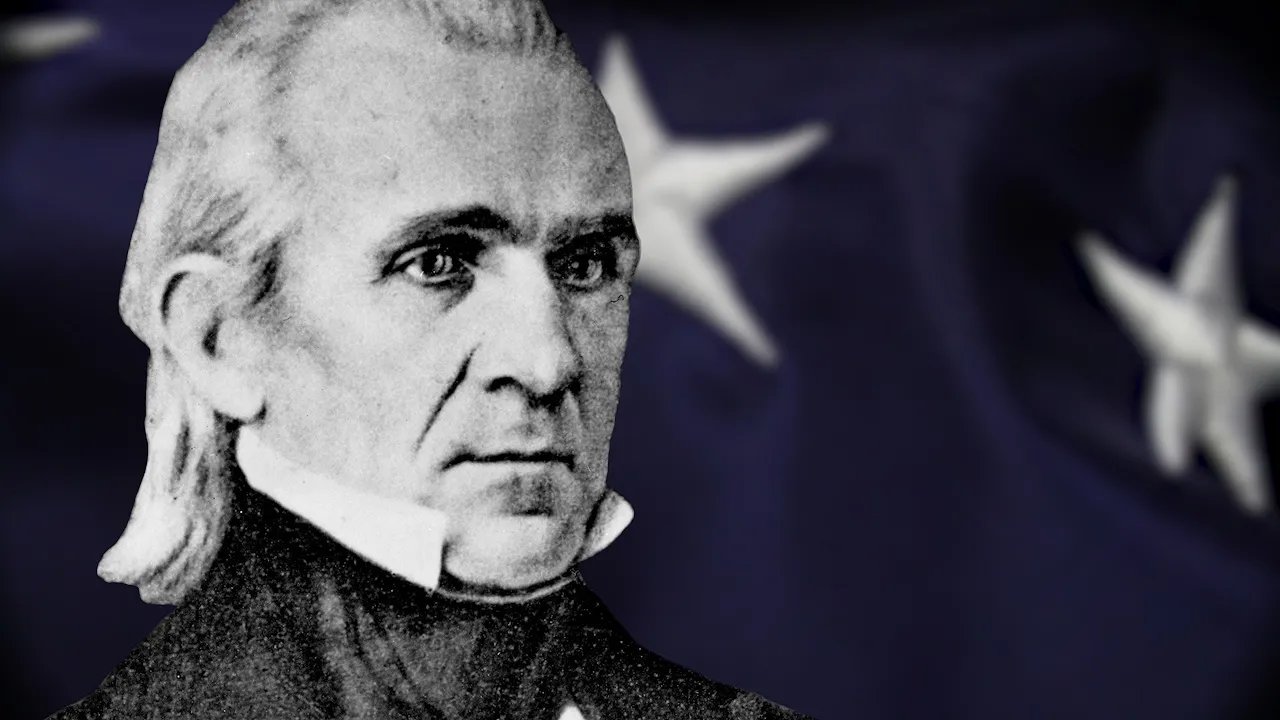
The Controversial Presidency of James K. Polk

marydilip.info – James K. Polk, the 11th President of the United States, remains one of the most controversial figures in American history. Serving from 1845 to 1849, Polk’s presidency was marked by a relentless pursuit of territorial expansion, a focus on Manifest Destiny, and numerous political battles that shaped the trajectory of the nation. While Polk is often credited with achieving significant territorial gains and fulfilling a bold vision for the United States, his presidency was also plagued by controversy, including the Mexican-American War, his handling of slavery, and his political conflicts with both his own party and opposition leaders.

This article explores the complex and controversial presidency of James K. Polk, examining both his achievements and the criticisms that followed his administration.

The Road to the Presidency: A Controversial Candidate

James K. Polk’s path to the White House was itself a testament to his political astuteness and the turbulent political climate of the 1840s. Polk entered the race for president as a dark horse candidate in 1844. The Democratic Party was divided, with Martin Van Buren and other prominent figures vying for the nomination. However, Polk’s combination of political experience and alignment with the party’s expansionist wing won him the nomination at the Democratic National Convention.

Once nominated, Polk’s campaign focused heavily on territorial expansion, particularly the annexation of Texas and the acquisition of Oregon. His slogan, “Fifty-four Forty or Fight,” which called for U.S. control of the Oregon Territory up to the 54° 40′ latitude line, resonated with many Americans who believed in Manifest Destiny—the idea that the United States was destined to expand across the North American continent.

Polk’s victory in the 1844 election was a significant moment for expansionists, but it was also controversial. His aggressive stance on territorial acquisition alarmed many in the Whig Party and other opponents, who viewed his policies as reckless and a potential cause of war. Nevertheless, Polk’s ability to unite the Democratic Party behind his vision for the nation helped him secure the presidency.

The Mexican-American War: A War of Controversy

One of the most controversial aspects of James K. Polk’s presidency was his handling of the Mexican-American War. Polk had a clear vision for territorial expansion, which included the annexation of Texas and the acquisition of vast territories in the Southwest, including California. When Mexico refused to recognize the annexation of Texas, tensions between the two nations escalated, culminating in the outbreak of war in 1846.

Polk’s decision to go to war with Mexico was met with fierce opposition from various quarters, including the Whig Party and anti-slavery factions. Critics, including Congressman Abraham Lincoln, argued that Polk had intentionally provoked the war in order to expand slavery into new territories. They believed that the conflict was a means for the South to gain more slave states and strengthen the institution of slavery.

The war itself was a military success for the United States, with U.S. forces capturing vast territories, including California, Arizona, New Mexico, and parts of present-day Nevada, Utah, and Colorado. The Treaty of Guadalupe Hidalgo, signed in 1848, formally ended the war and ceded over 500,000 square miles of territory to the United States, effectively fulfilling Polk’s expansionist vision.

However, the war’s legitimacy remained hotly debated. Many Americans viewed it as an unjust conflict driven by the desire for land and power. The war deepened sectional divisions over slavery, with debates about whether the newly acquired territories should allow slavery or remain free. Polk’s war was instrumental in accelerating the tensions that would eventually lead to the Civil War, making his role in the conflict a significant point of contention in American history.

Slavery and the Expansion Debate

Polk’s handling of slavery and the debate over the extension of slavery into new territories was another source of controversy during his presidency. While Polk himself was a slaveowner, his administration’s policies on slavery were shaped by the political realities of the time. The newly acquired territories from the Mexican-American War reignited debates about whether slavery should be permitted in these areas.

Polk was sympathetic to the interests of southern slaveholders, and his administration worked to maintain the balance of power between free and slave states. However, his refusal to take a firm stance on the expansion of slavery into new territories created a political vacuum that fueled further division. The issue of slavery in the territories became one of the most contentious issues in American politics, leading to the rise of the Free Soil movement and the eventual eruption of the Civil War.

In addition to his own stance on slavery, Polk’s presidency saw the emergence of competing political ideologies surrounding the issue. Northern abolitionists and anti-slavery advocates, including the Whig Party and the emerging Republican Party, saw Polk’s policies as an attempt to expand slavery, while southern Democrats and slaveholding interests supported the president’s agenda as a means of securing their way of life.

Polk’s failure to address the issue of slavery definitively in the newly acquired territories created long-term problems for the United States, contributing to the sectional crisis that would ultimately culminate in the Civil War.

Domestic Policies and Political Conflicts

Polk’s domestic policies were also marked by significant controversy, particularly in regard to his economic and fiscal decisions. One of his key domestic achievements was the reduction of tariffs. Polk sought to lower tariffs, which he believed would benefit consumers and promote trade. His administration successfully passed the Walker Tariff of 1846, which reduced tariff rates and was hailed by many as a major accomplishment.

However, Polk’s economic policies also faced criticism from those who believed that lower tariffs would harm American manufacturers and lead to economic instability. In particular, northern industrialists, who relied on protective tariffs to shield them from foreign competition, opposed Polk’s tariff reductions. His economic policies created a significant divide between northern and southern interests, further exacerbating sectional tensions.

Another controversial aspect of Polk’s presidency was his approach to banking and monetary policy. Polk favored the establishment of an independent treasury system, which was intended to stabilize the economy and prevent the overreach of private banks. While the system was successful in reducing the power of banks, it also limited the federal government’s ability to manage financial crises, which would become evident in later decades.

Polk also faced internal political conflicts within his own party. While he was a popular figure among Democrats who supported his expansionist policies, his aggressive foreign policy and economic decisions alienated some party members. His presidency saw increasing polarization between pro-expansion Democrats and anti-expansion factions, particularly in the North.

The End of Polk’s Presidency and Legacy

Polk’s presidency ended in 1849, and he left office amid growing political turmoil and the looming crisis over slavery. Having achieved most of his major goals—territorial expansion, lower tariffs, and the establishment of the independent treasury—Polk could have retired as a successful president. However, his failure to effectively address the slavery issue and his role in the Mexican-American War left behind a divided nation.

Polk’s legacy is a subject of much debate. Some historians praise him for his successful expansion of U.S. territory and his unwavering commitment to his vision of Manifest Destiny. Others criticize him for his role in the Mexican-American War, the exacerbation of sectional tensions, and his failure to address the issue of slavery in a meaningful way. Polk is often seen as a president who fulfilled his ambitions but did so at great cost to the unity of the nation.

Conclusion: A Controversial President with Lasting Impact

James K. Polk’s presidency was marked by bold ambition, political conflict, and controversial decisions that would shape the future of the United States. His pursuit of territorial expansion and his handling of the Mexican-American War have left an indelible mark on American history. While Polk’s achievements in expanding the nation are undeniable, his presidency also deepened divisions over slavery, set the stage for future conflicts, and left a legacy of political turmoil.

Polk’s presidency remains controversial because of the costs associated with his expansionist agenda—costs that were felt not only in terms of human lives and political strife but also in the long-term consequences for the nation’s unity. Today, historians continue to grapple with the legacy of James K. Polk, examining his leadership in the context of a nation at a crossroads.
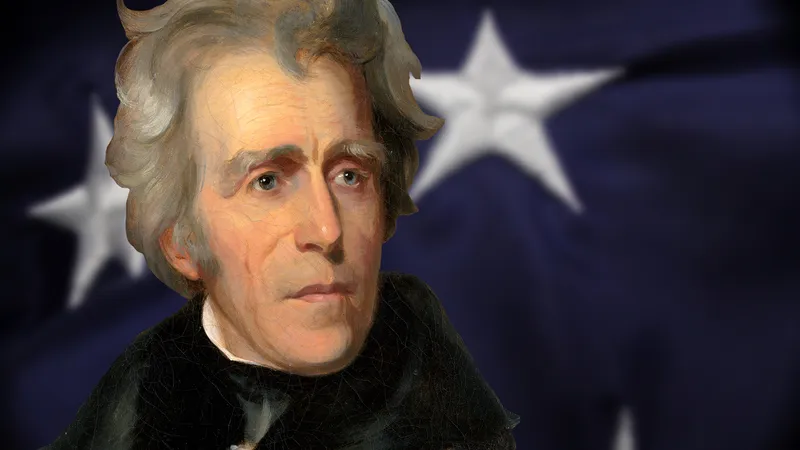
Andrew Jackson’s Impact on the Presidency

marydilip.info – Andrew Jackson, the seventh president of the United States, left an indelible mark on the office of the presidency, transforming the role in ways that shaped the course of American history. His two terms in office, from 1829 to 1837, were characterized by a shift toward a more populist and powerful presidency, marked by his embrace of executive authority and his appeal to the common citizen. Jackson’s presidency laid the foundation for the modern executive branch, and his influence is still felt in the political landscape today. This article explores Andrew Jackson’s impact on the presidency, examining his policies, his confrontations with Congress, and the long-lasting changes he brought to the office.

The Rise of Jacksonian Democracy

A Champion of the Common Man

One of Jackson’s most significant contributions to the presidency was his promotion of what became known as Jacksonian Democracy, a political movement that emphasized the rights and power of the “common man” over the elite. Before Jackson, the presidency had often been seen as an office held by well-educated elites, many of whom hailed from wealthy or politically connected families. Jackson, in contrast, presented himself as a man of the people, a frontiersman who had risen from humble beginnings to national prominence.

Born in the backwoods of the Carolinas and orphaned at a young age, Jackson’s rise to power resonated with ordinary Americans, particularly in the western and southern states. He tapped into the growing sense of discontent among working-class citizens who felt excluded from the political process. Jackson’s supporters believed that the government had been dominated by a wealthy and entrenched elite, and they saw him as a leader who would challenge the status quo and restore political power to the people.

Jackson’s election in 1828 was a turning point in American politics, marking the first time a president had been elected largely on the strength of popular support. His victory reflected a shift in the electorate, as more states extended voting rights to white men who did not own property. This expanded electorate helped Jackson build a political coalition that was deeply rooted in populism, and his presidency is often seen as the beginning of mass democracy in the United States.

The Spoils System

Jackson’s populist approach to governance extended to the way he staffed his administration. He famously implemented the spoils system, a practice in which political supporters were rewarded with government jobs. Jackson argued that government positions should be open to ordinary citizens rather than being monopolized by a small group of elites. By rotating officeholders and appointing loyal supporters, Jackson sought to make the government more responsive to the will of the people.

While the spoils system helped Jackson strengthen his political base, it also led to charges of cronyism and corruption. Critics argued that unqualified individuals were being placed in important government positions simply because of their political loyalty to Jackson. Despite these criticisms, the spoils system became a fixture of American politics for decades after Jackson’s presidency, and it reflected his belief that government should be more accountable to the public.

The Expansion of Executive Power

The Veto Power

Jackson’s presidency marked a significant expansion of executive power, particularly through his use of the veto. Prior to Jackson, presidents had been relatively restrained in their use of the veto, typically exercising it only when they believed a law was unconstitutional. Jackson, however, used the veto as a political tool to assert his authority over Congress and to shape policy.

One of Jackson’s most famous vetoes came in 1832, when he blocked the recharter of the Second Bank of the United States. Jackson believed that the bank was an instrument of the wealthy elite and that it wielded too much influence over the economy. His veto of the bank’s recharter was a bold move that pitted him directly against Congress and the financial establishment. Jackson’s decision to veto the bank was popular among his supporters, who saw it as a victory for the common man against powerful economic interests.

By using the veto to express his policy preferences, Jackson set a precedent for future presidents. His actions signaled that the president could play an active role in shaping legislation, rather than simply serving as an enforcer of laws passed by Congress. Jackson’s assertive use of the veto was a key factor in the evolution of the presidency into a more dynamic and influential institution.

The Nullification Crisis: Presidential Authority and States’ Rights

Jackson’s presidency was also marked by his firm stance on preserving the Union, particularly during the Nullification Crisis of 1832-1833. The crisis arose when South Carolina, led by Vice President John C. Calhoun, declared that it had the right to nullify federal tariffs that it believed were unconstitutional. South Carolina’s nullification of the Tariff of 1828 and the Tariff of 1832 challenged the authority of the federal government and raised the possibility of secession.

Jackson, a staunch nationalist, believed that nullification threatened the integrity of the Union, and he responded forcefully. He issued a Proclamation to the People of South Carolina, in which he condemned nullification as a form of treason and declared that the federal government would use military force, if necessary, to enforce federal laws. To back up his words, Jackson requested and received from Congress the Force Bill, which authorized him to use the military to compel South Carolina’s compliance.

Ultimately, a compromise was reached with the help of Henry Clay, and South Carolina rescinded its nullification of the tariffs. However, Jackson’s actions during the Nullification Crisis reaffirmed the supremacy of the federal government over the states and demonstrated the president’s willingness to use executive power to preserve the Union. His firm response to the crisis reinforced the idea that the president was not merely an administrator but a powerful defender of national unity.

The Indian Removal Policy

The Indian Removal Act of 1830

One of the most controversial aspects of Jackson’s presidency was his policy toward Native Americans, particularly the passage of the Indian Removal Act of 1830. Jackson had long been a proponent of westward expansion, and he believed that the removal of Native American tribes from their ancestral lands in the southeastern United States was necessary to facilitate the growth of the nation.

The Indian Removal Act authorized the forced relocation of Native American tribes, including the Cherokee, Creek, Seminole, Chickasaw, and Choctaw, to territories west of the Mississippi River. While Jackson framed the policy as beneficial to both Native Americans and white settlers, it resulted in immense suffering for the tribes, many of whom were forced to embark on the Trail of Tears, a harrowing journey that led to the death of thousands of Native Americans.

Jackson’s Indian removal policy was widely popular among white settlers in the South and West, who saw it as a way to open up new lands for agriculture and settlement. However, it remains one of the most morally contentious aspects of his presidency, and it has left a lasting stain on his legacy. Jackson’s actions toward Native Americans reflected his belief in the supremacy of the federal government and the inevitability of American expansion, but they also highlighted the darker side of his populist rhetoric.

The Legacy of Jackson’s Presidency

The Birth of the Democratic Party

Andrew Jackson’s presidency is often credited with the formation of the modern Democratic Party. Jackson’s populist appeal, his emphasis on the common man, and his opposition to entrenched elites became the defining characteristics of the Democratic Party, which he helped build during his time in office. Under Jackson’s leadership, the party evolved into a political organization that sought to represent the interests of ordinary Americans, particularly in the southern and western states.

Jackson’s influence on the Democratic Party extended beyond his presidency. His political philosophy, known as Jacksonian Democracy, continued to shape the party’s platform for decades. His vision of a government that was more responsive to the people and less beholden to powerful elites resonated with many Americans, and his legacy as the founder of the Democratic Party endures to this day.

The Transformation of the Presidency

Jackson’s impact on the presidency was profound. He expanded the role of the executive branch and redefined the office of the president as an active, powerful force in American politics. His use of the veto, his confrontations with Congress, and his willingness to challenge established institutions like the Bank of the United States all contributed to the evolution of the presidency into a more dynamic and influential institution.

Jackson’s presidency also marked a shift toward a more personal and charismatic style of leadership. He was the first president to actively appeal directly to the American people, and his ability to connect with voters through his populist rhetoric helped set the stage for future presidents to use the office as a platform for advancing their political agendas.

Conclusion: Jackson’s Enduring Impact

Andrew Jackson’s impact on the presidency was transformative. He redefined the role of the president in American politics, expanding executive authority and promoting a more populist, democratic vision of government. His leadership during the Nullification Crisis, his use of the veto, and his controversial Indian removal policy all demonstrated his willingness to exercise the powers of the presidency in bold and unprecedented ways.

While Jackson’s presidency remains controversial, particularly in light of his treatment of Native Americans, his legacy as a powerful and influential leader cannot be denied. His impact on the presidency continues to be felt in the modern era, as the office has evolved into a central force in American government and politics.