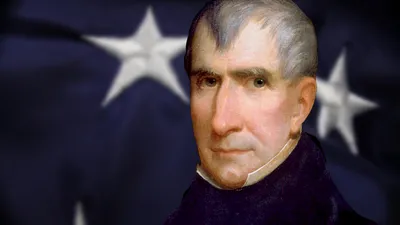
William Henry Harrison: From Soldier to President

marydilip.info – William Henry Harrison, the 9th President of the United States, is often remembered for his incredibly brief presidency, lasting only 31 days. However, his rise to the nation’s highest office was anything but brief. Harrison’s journey from a soldier on the front lines to the White House is a fascinating tale of military service, political ambition, and the complexities of early American life. His military prowess, political savvy, and personal character shaped much of his legacy, and his path to the presidency reveals much about the era in which he lived.

Early Life and Background

William Henry Harrison was born on February 9, 1773, in Berkeley Plantation, Virginia, into a family with a rich political heritage. His father, Benjamin Harrison V, was a signer of the Declaration of Independence and later served as Governor of Virginia. The Harrison family was well-connected, providing William Henry with a privileged upbringing, yet his early life was one of transition and change.

Harrison’s formal education began at the College of New Jersey (now Princeton University), though he did not finish his studies there. Instead, at the age of 18, Harrison left school to pursue a career in medicine, training under a local physician. However, his path would soon take a different turn when he was offered a commission in the United States Army in 1791 during the Northwest Indian War, which would become the beginning of his military career.

The Military Career: Soldiering on the Front Lines

Harrison’s decision to join the army was influenced by the opportunity to serve his country and defend its frontier. In 1791, at the age of 18, he was appointed an ensign in the U.S. Army, and he quickly proved himself as a capable officer. His early service was marked by his involvement in the struggles against Native American tribes in the Ohio River Valley, a region that was central to the United States’ expansion.

Harrison’s first notable military engagement came during the campaign to retake the western territories from Native American control. In 1794, he was promoted to lieutenant and was stationed at Fort Washington (present-day Cincinnati), where he became deeply involved in the ongoing conflicts. He fought in the Battle of Fallen Timbers, a pivotal victory that secured American control over the Northwest Territory. This success established Harrison as a rising military star.

The Battle of Tippecanoe and National Recognition

Harrison’s military career reached its pinnacle in 1811 during the War of 1812. Before the war formally broke out, Harrison, who by then was the Governor of the Indiana Territory, became involved in a series of conflicts with Native American tribes who opposed American expansion. The most significant of these was the Battle of Tippecanoe, fought on November 7, 1811.

In the early 1800s, Tecumseh, a Shawnee chief, had united several Native American tribes in the region to resist American encroachment. His brother, Tenskwatawa (the Prophet), led a spiritual movement against the American settlers. In response to these growing tensions, Harrison led an expedition to confront the Native Americans at Tippecanoe, a settlement in what is now Indiana. The ensuing battle was fierce, and although Harrison’s forces won, the battle was costly in terms of casualties and its aftermath.

The victory at Tippecanoe made Harrison a national hero and earned him the moniker “Old Tippecanoe.” The battle’s significance, combined with his military service, propelled Harrison into the national spotlight. It also set the stage for his future political career, as he became a symbol of American expansion and military prowess.

Political Rise and the Indiana Territory

Harrison’s military success helped launch his political career. In 1800, President John Adams appointed him as the Governor of the Indiana Territory, a position he would hold for over a decade. As governor, Harrison’s primary role was overseeing the settlement of American land and managing relations with Native American tribes. His work in this capacity helped open up the frontier to American settlers and solidified his reputation as a capable administrator.

Harrison’s tenure as governor was marked by his persistent efforts to negotiate land treaties with Native American tribes, although many of these agreements were often contentious. He presided over the formation of several new states in the western frontier, including Indiana, which achieved statehood in 1816.

During his time in the Indiana Territory, Harrison’s political ambitions began to take shape. He won election to the U.S. House of Representatives in 1816 and served a term in Congress, where he began to align himself with the interests of land expansion, the American frontier, and the protection of settlers’ rights.

The 1820s and 1830s: Harrison’s Political Return

After a brief period out of the national spotlight, Harrison returned to political life in the 1820s and 1830s. He was elected to the U.S. Senate in 1824, where he joined the ranks of prominent Whigs such as Henry Clay and Daniel Webster, advocating for internal improvements, a strong national bank, and protective tariffs. His time in Washington was marked by his ability to forge political alliances and appeal to the interests of the growing Western and Southern territories.

Harrison’s political positions, especially his advocacy for expansion and economic growth, earned him respect among both Whigs and many Democratic-Republicans. He ran for the presidency in 1836, but his efforts were thwarted by the incumbent, Martin Van Buren. However, Harrison’s political resilience and growing popularity would set the stage for his final and most successful presidential campaign.

The 1840 Presidential Election: A Remarkable Comeback

By 1840, Harrison was a seasoned politician with decades of experience. His reputation as a military hero and statesman was well established, and he decided to run for president once again. The Whig Party, eager to challenge Van Buren’s administration, nominated Harrison to run for president. At 67 years old, he was the oldest presidential candidate in history at the time, which became a key talking point during the election.

Harrison’s campaign strategy was centered around his image as a man of the people. The Whigs presented him as a humble frontiersman who had lived a simple, rugged life, in contrast to Van Buren, who was portrayed as an out-of-touch aristocrat. The campaign slogan “Tippecanoe and Tyler Too,” referring to his military victory at Tippecanoe and his running mate, John Tyler, resonated with the public. The campaign utilized new tactics, such as mass rallies, parades, and slogans, which were innovative for their time.

The 1840 election was one of the first to employ modern political campaign techniques, and Harrison triumphed over Van Buren in a landslide, winning both the popular and electoral vote. His victory marked the first time the Whig Party captured the presidency.

The Presidency and Its Tragic End

Harrison’s presidential inauguration took place on March 4, 1841, and he made history as the oldest man to become president at the time. His inauguration was a grand affair, with Harrison delivering one of the longest inaugural addresses in American history. However, the cold and windy weather that day took a toll on Harrison’s health. He contracted a severe cold, which quickly developed into pneumonia.

Just 31 days into his presidency, on April 4, 1841, Harrison succumbed to his illness and passed away, making his term the shortest in U.S. history. His sudden death led to a constitutional crisis, with questions about the legitimacy of Vice President John Tyler’s assumption of the presidency.

Legacy: A Heroic, Yet Brief Presidency

Though his presidency was cut short, William Henry Harrison’s legacy endures in American history. He is remembered as a military hero and a symbol of American expansion and perseverance. His death marked a turning point in the understanding of presidential succession and the nation’s political practices. The clarity that followed regarding the procedures for replacing a deceased president would ultimately lead to the passage of the 25th Amendment in 1967.

Harrison’s journey from soldier to president reflects the themes of early American life—struggles for expansion, the importance of military leadership, and the emergence of populist politics. His brief time in office and his legacy as a war hero made him a lasting figure in the annals of U.S. history.
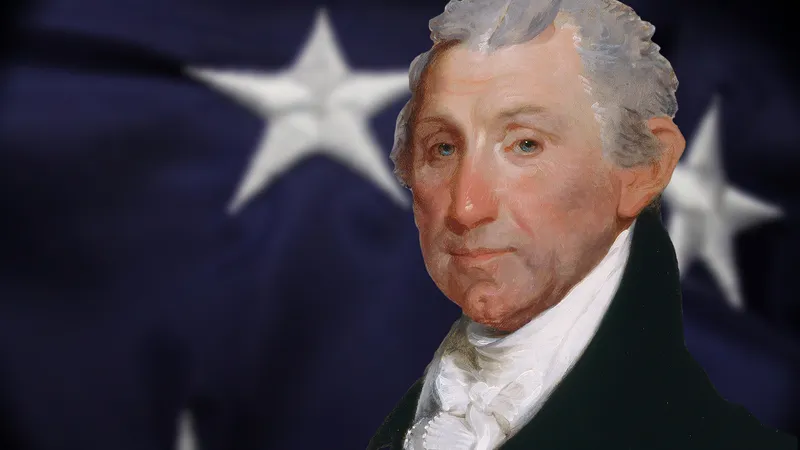
The Life and Times of James Monroe – Early Life

marydilip.info – James Monroe, the fifth president of the United States, led the country through a significant period of growth and national unity, known as the “Era of Good Feelings.” Monroe’s legacy as a statesman, diplomat, and president is often overshadowed by his more famous contemporaries, such as Thomas Jefferson and Andrew Jackson. Yet, Monroe’s contributions to the formation of the nation’s political identity, foreign policy, and territorial expansion are undeniable. From his military service during the Revolutionary War to his presidency, Monroe’s life provides a fascinating glimpse into the development of early American politics.

Early Life: A Humble Beginning

Birth and Family Background

James Monroe was born on April 28, 1758, in Westmoreland County, Virginia, to a modest family. His father, Spence Monroe, was a farmer who passed away when James was just 16, leaving his mother, Elizabeth, to raise him and his siblings. Though they were not wealthy, Monroe’s family was part of Virginia’s gentry, and his father’s early death did not leave Monroe destitute.

Monroe’s early years were marked by hard work, but he was also fortunate enough to receive an education. He attended the College of William & Mary in Williamsburg, Virginia, before leaving to serve in the Revolutionary War. His experience at the university would influence his later involvement in the development of the nation’s legal and political systems.

Military Service During the American Revolution

Monroe’s military service in the Continental Army during the American Revolution was formative, both in shaping his political ideals and in his personal development. Monroe enlisted at the age of 18 in 1776, serving as a second lieutenant in the 3rd Virginia Regiment. He fought in some of the most significant battles of the war, including the Battle of Trenton, where he was wounded by a musket ball.

Monroe’s experiences in the war instilled in him a deep sense of patriotism and a lifelong commitment to American independence. His time on the battlefield shaped his views on national defense, military leadership, and the importance of a unified republic. In fact, his military service became a cornerstone of his future political career, giving him credibility as a leader in both Virginia and on the national stage.

Political Beginnings

Early Political Career

After the war, Monroe returned to Virginia, where he studied law under Thomas Jefferson’s mentor, George Wythe. In 1782, Monroe was elected to the Virginia House of Delegates, marking the beginning of his long and varied political career. His early years in politics were influenced by the ideals of the American Revolution—particularly republicanism and a belief in the importance of individual liberties.

Monroe quickly gained a reputation as an advocate for the common people, supporting policies that would provide economic relief for farmers and promote westward expansion. He was elected to the Continental Congress in 1783, and it was during this time that he became a vocal proponent of strengthening the national government, a stance that ultimately led him to support the U.S. Constitution.

U.S. Senate and Governor of Virginia

Monroe was elected to the U.S. Senate in 1790, where he served until 1794. While in the Senate, Monroe took an active role in foreign policy, including advocating for the French Revolution and opposing the Federalist policies of Alexander Hamilton and John Adams. His support for the French Revolution put him at odds with many in the U.S. government, particularly during the presidency of George Washington, and he was eventually recalled from his post as ambassador to France.

Monroe’s relationship with Washington deteriorated during this period, but his political fortunes improved when he returned to Virginia and was elected governor in 1799. As governor, Monroe worked to promote internal improvements and to stabilize Virginia’s economy after the Revolutionary War. His time as governor was significant not only for his leadership within Virginia but also for his broader influence on national policies that would eventually come to fruition during his presidency.

Diplomacy and Key Appointments

Ambassador to France and Spain

Monroe’s diplomatic career was perhaps his most defining feature before he became president. In 1794, President Washington appointed him to be the U.S. Minister to France. During his time in Paris, Monroe developed a deep admiration for the French Revolution, which led to tensions with President Washington’s administration. Monroe’s diplomatic style, characterized by a firm defense of American interests, often clashed with the more cautious approach favored by Washington and his successor, John Adams.

In 1803, Monroe was sent to France once again, this time to help negotiate the purchase of the Louisiana Territory. His efforts, along with those of his fellow diplomat Robert Livingston, resulted in the historic Louisiana Purchase, which effectively doubled the size of the United States and secured the country’s future as a continental power.

Monroe’s diplomatic success continued when he was sent to Spain to negotiate over Florida. In 1819, he and his Spanish counterpart, Luis de Onís, negotiated the Adams-Onís Treaty, in which Spain ceded Florida to the United States and agreed to set a boundary between U.S. and Spanish territories in North America. The treaty was a significant diplomatic achievement, consolidating U.S. territory and expanding the nation’s influence on the continent.

Secretary of State and War

Before becoming president, Monroe served as Secretary of State under President James Madison from 1811 to 1814. During the War of 1812, Monroe was also appointed Secretary of War, a position that gave him direct responsibility for overseeing military operations against the British.

Monroe’s leadership during the War of 1812 is often noted for his efforts to restore morale and strengthen the country’s military readiness. Although the war ended in a stalemate with the Treaty of Ghent (1814), Monroe’s handling of war matters gained him considerable respect.

The Presidency: A Time of National Unity

The “Era of Good Feelings”

Monroe’s presidency, from 1817 to 1825, is often referred to as the “Era of Good Feelings,” a period marked by national unity and political harmony. The Federalist Party had essentially faded from the political landscape, leaving the Democratic-Republican Party as the dominant political force. Monroe’s administration was able to navigate a range of issues—economic development, territorial expansion, and foreign policy—without the deep partisan divides that had characterized previous administrations.

The Monroe Doctrine

One of the most enduring legacies of Monroe’s presidency is the Monroe Doctrine, which he articulated in 1823. This foreign policy doctrine declared that the Western Hemisphere was no longer open to European colonization and that any European intervention in the Americas would be viewed as a hostile act against the United States. The Monroe Doctrine was a bold assertion of U.S. power and had long-lasting implications for American foreign policy, establishing the U.S. as a dominant force in the Western Hemisphere.

Domestic Achievements and Challenges

Monroe’s presidency also saw significant domestic achievements, particularly in the areas of economic development and territorial expansion. Monroe supported the development of internal improvements, including roads, canals, and infrastructure projects, which helped to connect the expanding nation. However, the nation faced ongoing tensions over the issue of slavery, which would eventually lead to the Civil War.

The Missouri Compromise of 1820 was a critical piece of legislation passed during Monroe’s presidency. It allowed Missouri to enter the Union as a slave state while admitting Maine as a free state, maintaining a balance between North and South. The compromise temporarily eased tensions, but it underscored the growing sectional divides in the country.

The Acquisition of Florida and Territorial Expansion

Monroe’s presidency was marked by significant territorial expansion. In addition to the Adams-Onís Treaty that secured Florida, Monroe’s administration oversaw the expansion of the United States’ borders westward. Monroe’s vision of an expanding nation, free from European interference, became a defining feature of his presidency.

Later Life and Legacy

Post-Presidency and Death

After leaving office, Monroe retired to his home, Ash Lawn-Highland, in Virginia. He lived a quiet life but remained active in politics, offering advice and insight to future generations of American leaders. Monroe’s later years were overshadowed by personal hardships, including financial difficulties. He died on July 4, 1831, at the age of 73—remarkably, just five years after the deaths of Thomas Jefferson and John Adams, both of whom had been pivotal figures in the nation’s founding.

Monroe’s Legacy

Monroe’s legacy is multifaceted. His presidency helped to define the American approach to foreign policy, especially through the Monroe Doctrine, which shaped U.S. relations with Europe and Latin America for over a century. His support for westward expansion and internal improvements helped lay the groundwork for the United States’ growth as a continental power.

While Monroe’s presidency was marked by relative peace and prosperity, it also highlighted the deepening divides over issues like slavery and sectionalism that would later erupt into the Civil War. Nonetheless, Monroe’s leadership during the “Era of Good Feelings” represents a key moment in American history when national unity and optimism were at their peak.

Conclusion

James Monroe’s life and times spanned some of the most formative years in the history of the United States. His contributions as a soldier, diplomat, governor, and president helped to shape the country’s political identity, its territorial boundaries, and its place in the world. Monroe’s legacy as a statesman, particularly through the Monroe Doctrine, continues to resonate in American foreign policy today. His life serves as a reminder of the dedication, vision, and challenges faced by the early leaders of the American republic.