Benjamin Harrison: The President Who Pushed for Naval Power

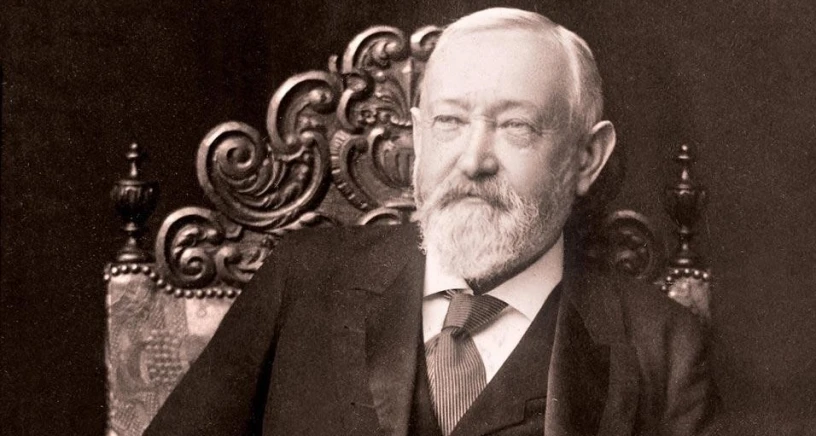
marydilip.info – Benjamin Harrison, the 23rd president of the United States, presided over an administration that was shaped by an evolving view of America’s role in global politics. One of the most significant and enduring aspects of Harrison’s presidency was his commitment to strengthening the U.S. Navy and asserting the nation’s power on the world stage. The late 19th century was a time of profound change, as the United States began to transition from a largely isolationist nation to a more assertive global power. Harrison’s vision of naval power as central to American foreign policy would shape the trajectory of the nation’s military, diplomatic, and economic strategies in the years to come.

While Harrison is often remembered for his role in domestic policy, particularly his advocacy for civil service reform and the tariff debate, his impact on America’s naval strategy and his vision for the country’s position in the global balance of power are equally significant. This article will explore how Harrison’s push for naval power helped lay the foundation for the United States’ eventual emergence as a major world power in the 20th century.

The Context of U.S. Naval Policy in the Late 19th Century

The Naval Background Before Harrison’s Presidency

Before Harrison’s time in office, the United States had largely embraced a policy of isolationism, focusing on domestic affairs rather than engaging in global conflicts. This was reflected in the state of the U.S. Navy, which, despite occasional periods of expansion, remained relatively small and underfunded compared to the naval forces of European powers. The U.S. Navy in the late 19th century was primarily oriented toward coastal defense rather than projecting power overseas.

By the 1880s, however, the changing global dynamics and the increasing competition among European powers, particularly in Africa and Asia, began to compel American policymakers to reconsider the country’s position in the world. A growing belief in American exceptionalism and the idea that the United States should play a larger role in global affairs was beginning to take hold. As the nation industrialized and expanded its interests abroad, it became clear that naval power was essential to projecting influence in far-off regions.

The Influence of Alfred Thayer Mahan

A crucial intellectual influence on Harrison’s naval policy was the work of Alfred Thayer Mahan, a U.S. Navy officer and historian whose writings emphasized the importance of sea power in achieving national greatness. Mahan’s 1890 book, The Influence of Sea Power Upon History, argued that a strong navy was essential to a nation’s economic prosperity and military security, especially in an era of global competition and imperialism.

Mahan’s theories had a profound impact on U.S. military thinking, and many of his ideas were adopted by policymakers during Harrison’s presidency. He contended that controlling key sea routes, establishing overseas bases, and building a modern fleet were essential elements of national power. By the time Harrison entered office in 1889, Mahan’s theories were gaining widespread influence within the U.S. Navy and among those who believed that the United States needed to increase its naval capabilities in order to compete with the European powers.

Harrison’s Vision for Naval Power

The Importance of a Strong Navy

When Benjamin Harrison took office in 1889, he inherited a country that was increasingly aware of the need to protect its interests abroad. As a former senator and a man with a keen sense of national pride, Harrison understood the importance of military strength in an era of expanding global commerce and competition. In his view, a modern and powerful navy was not only a necessary tool for securing the country’s trade routes but also a means to enhance American prestige and influence on the world stage.

Harrison’s support for a more robust naval policy was rooted in both practical concerns and broader geopolitical considerations. He believed that a strong navy was crucial for the protection of American economic interests, particularly as the nation looked to expand its commercial ties with Asia, Latin America, and the Pacific. A modern navy would be vital for securing and protecting the newly acquired territories from the Spanish-American War, and for asserting American power in the Pacific and Caribbean.

Harrison’s Naval Building Program

One of Harrison’s primary achievements in regard to naval power was his commitment to expanding and modernizing the U.S. Navy. Harrison inherited a fleet that was outdated and underprepared for the challenges of a rapidly changing world. He understood that in order to compete with European powers such as Great Britain, Germany, and France, the United States needed to invest in cutting-edge naval technology and infrastructure.

To this end, Harrison pushed for significant investments in the construction of new warships, including battleships, cruisers, and torpedo boats, which would form the backbone of a new, modern fleet. Harrison’s administration played a key role in advocating for the construction of steel-hull ships, which would prove to be more durable and effective than the wooden ships that had previously constituted the fleet.

Harrison’s leadership in the expansion of the navy was also driven by the recognition that the United States needed to maintain naval bases in key regions, particularly in the Pacific and Caribbean. These bases would serve as vital points for projecting American power and securing trade routes. The construction of a modern navy was seen as a necessary step toward ensuring that the United States could defend its interests overseas, especially as European nations began to compete for influence in the Americas, Asia, and Africa.

The 1890 Naval Appropriations Act

A critical moment in Harrison’s pursuit of naval power came with the passage of the 1890 Naval Appropriations Act, which authorized the construction of several new warships. The legislation was a direct response to the growing recognition that the U.S. Navy needed modernization and expansion to keep pace with the naval forces of other global powers. Under Harrison’s leadership, the United States embarked on a comprehensive naval construction program that would lay the foundation for the country’s emergence as a naval power in the 20th century.

The Naval Appropriations Act of 1890 allocated significant funds for the construction of several advanced warships, including the USS Indiana, which became the first modern battleship in the U.S. Navy. This was a major step forward in the development of a modern fleet capable of projecting power across the globe. Additionally, Harrison’s administration made strategic investments in naval infrastructure, including ports, shipyards, and training facilities, which would ensure that the Navy was prepared to operate on a global scale.

The creation of this new, modern fleet was part of a broader vision that saw the United States not just as a continental power, but as a force capable of influencing world events. Harrison’s commitment to a strong, technologically advanced navy laid the groundwork for the United States to eventually become a dominant naval power, particularly in the Pacific and the Caribbean.

The Role of Naval Power in U.S. Foreign Policy

The Influence on U.S. Territorial Expansion

Harrison’s push for naval power was closely linked to America’s territorial ambitions in the late 19th century. The Spanish-American War of 1898, which occurred shortly after Harrison left office, was a direct result of the expanding influence of U.S. naval power. The Navy played a central role in defeating the Spanish fleet and securing victory for the United States in the war.

The strategic importance of naval bases became evident during the war. The United States quickly established a naval presence in the Caribbean and the Pacific, and Harrison’s investments in modern warships helped ensure that the U.S. Navy was able to effectively combat Spanish forces. Following the victory, the United States emerged with control over several Spanish territories, including Puerto Rico, Guam, and the Philippines—territories that would serve as critical stepping stones for future American influence in Asia and the Pacific.

In this way, Harrison’s advocacy for naval power directly contributed to the expansion of U.S. territories and the nation’s increasing involvement in global affairs. The acquisition of overseas territories following the Spanish-American War marked the beginning of the United States’ transformation into an imperial power.

The Shift to a Global Power

While Harrison’s presidency was relatively brief, it was a crucial turning point in the evolution of American foreign policy. His commitment to strengthening the U.S. Navy signaled a shift toward a more active role in international affairs, especially in the Pacific and the Caribbean. The naval expansion program he championed laid the groundwork for U.S. interventions in global conflicts, as well as for the eventual establishment of the United States as a dominant force in the world.

The increasing naval power of the United States, driven by Harrison’s policies, would set the stage for the nation’s participation in the First World War and its eventual rise as a global superpower in the 20th century. In this sense, Harrison’s advocacy for naval strength was not just a matter of military preparedness—it was a key part of shaping the United States’ global strategy and ensuring its ability to protect its interests abroad.

The Legacy of Benjamin Harrison’s Naval Policy

Benjamin Harrison’s legacy in the realm of naval power is a significant but often overlooked aspect of his presidency. His efforts to modernize and expand the U.S. Navy were not merely a reflection of military ambition—they were part of a broader vision of American greatness that emphasized the importance of a strong, capable military in safeguarding national interests and asserting influence on the world stage.

Harrison’s policies on naval power laid the foundation for the American Century, a period in which the United States would become the dominant naval and economic power in the world. The fleet he helped build and the naval policies he championed would serve as a springboard for the United States to assert itself as a key player in global politics, particularly in the Pacific and the Caribbean. The shift in U.S. foreign policy toward greater involvement in international affairs was directly tied to the expansion of naval power during Harrison’s administration.

In the end, Benjamin Harrison’s presidency represents a pivotal moment in the history of American military and foreign policy. By pushing for a powerful navy and a more active role on the world stage, Harrison helped set the stage for the United States to emerge as a global superpower in the 20th century.
Chester A. Arthur: New York’s Political Boss Turned President

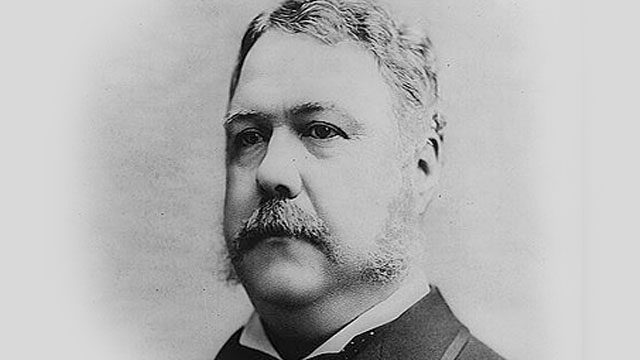
marydilip.info – Chester A. Arthur, the 21st president of the United States, remains one of the most enigmatic figures in American history. Although his presidency was short—lasting from 1881 to 1885—Arthur’s political journey from a New York political machine boss to a reform-oriented president is nothing short of remarkable. Often overshadowed by more well-known figures of the Gilded Age, such as Theodore Roosevelt and Grover Cleveland, Arthur’s time in office was full of contradictions that left many historians puzzled. Once viewed as an opportunistic politician with deep ties to the corrupt patronage system, Arthur underwent a transformation that would redefine his legacy and reshape American governance.

This article delves into the complex nature of Chester A. Arthur’s presidency, exploring his early career, the surprising shifts in his political philosophy, and his contributions to American politics and reform. Despite his initial connections to political machines, Arthur became a key figure in civil service reform, military modernization, and the professionalization of the U.S. government. His presidency, though brief, was transformative not only for the nation but also for Arthur himself, who evolved from a product of corruption to a surprising advocate for change.

Early Life and Political Beginnings: The Making of a Machine Politician

Humble Beginnings and Legal Career

Born on October 5, 1829, in Fairfield, Vermont, Chester Alan Arthur came from humble beginnings. His father, William Arthur, was a Baptist minister who moved the family several times during Chester’s early years. The family eventually settled in North Pownal, where Chester attended local schools. His academic ability was apparent early on, and he went on to attend Union College in Schenectady, New York. Graduating in 1848 near the top of his class, Arthur turned to law and began practicing in New York City.

While Arthur’s legal career was successful, it was in politics that he would make his most significant mark. The 1850s and 1860s were a time of intense political maneuvering in New York, and Arthur’s rising ambition drew him into the heart of the political machine. It was during this period that Arthur became involved with the Stalwarts, the faction of the Republican Party aligned with Senator Roscoe Conkling, who was a powerful political boss. The Stalwarts supported the spoils system, where government positions were awarded to political supporters rather than on merit.

In 1868, Arthur was appointed to a key position as the Collector of the Port of New York, a job that gave him control over appointments to vital government positions. The position also made him deeply entwined with the corrupt practices of the time. While Arthur was known for being an efficient administrator, his political connections and loyalty to Conkling led many to view him as a product of the system of political patronage.

Rise through the Political Machine

Arthur’s success in the New York political machine was built on his loyalty to Conkling and his ability to navigate the intricacies of patronage. As Collector of the Port, Arthur gained a reputation for his organizational skills, but his role in the distribution of government jobs also linked him to the corrupt practices of the era. The Stalwart faction of the Republican Party, which Arthur was a part of, was dedicated to maintaining the spoils system and resisting the reform efforts of the more moderate Half-Breeds.

Arthur’s political career seemed to be on a predictable path: he would remain a loyal servant of the machine, reaping the rewards of patronage and consolidating power within the Republican Party. However, Arthur’s story took an unexpected turn in 1880 when he was nominated for the vice-presidency under the candidacy of James A. Garfield.

A Surprising Ascension: From Political Boss to President

The Republican National Convention of 1880

Arthur’s nomination as vice president was the result of political calculations rather than any expectation of his personal contribution. The Republican Party was divided between the Stalwarts, led by Conkling, and the more moderate Half-Breeds, who sought reforms within the party. In a bid to unite the two factions, Arthur was chosen as Garfield’s running mate. While Garfield was a moderate who sought to address the issue of patronage, Arthur was seen as a staunch defender of the Stalwarts and the traditional system of political patronage.

Although Arthur’s nomination was largely seen as a compromise, no one could have anticipated how quickly he would ascend to the presidency. In July 1881, just months after taking office, President Garfield was shot by an assassin named Charles Guiteau. Garfield’s death in September 1881 led to Arthur assuming the presidency, and the transition from political boss to president was one of the most startling developments in American political history.

Initial Doubts about Arthur’s Leadership

Arthur’s rise to the presidency was met with skepticism, both from his political opponents and from those who had once supported him. Given his deep ties to the patronage system, many feared that his presidency would simply be a continuation of the corrupt practices of his predecessors. Some viewed Arthur as little more than a puppet of the Stalwarts, who would continue to reward political loyalty with government jobs rather than promoting merit and efficiency in government.

However, as Arthur began his presidency, it became clear that he was more than just a tool of the political machine. His presidency would prove to be one of surprising transformation.

The Transformation: A President of Reform

Embrace of Civil Service Reform

The most significant and unexpected aspect of Chester A. Arthur’s presidency was his transformation into a proponent of civil service reform. Arthur’s initial connection to the spoils system and political patronage made his later support for reform all the more surprising. However, the growing public outcry over the inefficiency and corruption associated with patronage created pressure for change, and Arthur responded.

In 1883, Arthur threw his support behind the Pendleton Civil Service Reform Act, which sought to establish a merit-based system for federal government jobs. The Pendleton Act created the Civil Service Commission, which would oversee the examination and hiring process for government employees. The law marked a dramatic break from the spoils system, and it was one of the most important pieces of reform legislation of the Gilded Age.

Arthur’s decision to support the Pendleton Act was a bold move, and it demonstrated that he was willing to put the needs of the country ahead of the political system that had helped him rise to power. The Pendleton Act helped to professionalize the federal workforce, ensuring that government jobs were awarded based on qualifications rather than political loyalty.

Other Reform Efforts and Achievements

In addition to the Pendleton Act, Arthur’s presidency was marked by other key reform efforts. One area where Arthur made a significant impact was in the modernization of the U.S. Navy. Recognizing the need for a strong military to support American interests abroad, Arthur oversaw the construction of new steel-hulled warships and the expansion of the Navy. Under his leadership, the U.S. began to modernize its military infrastructure, setting the stage for future American naval dominance.

Arthur’s presidency also saw progress in infrastructure development, including the completion of the transcontinental railroad and the expansion of the nation’s transportation network. These efforts were vital for the continued growth of the United States and its integration into the global economy.

The Legacy: A President Who Defied Expectations

Reconstructing Arthur’s Reputation

Chester A. Arthur’s legacy was not fully appreciated during his time in office, and it was not until later that historians began to reassess his contributions. For much of the 20th century, Arthur was seen as a placeholder, a political boss who had ascended to the presidency through circumstance rather than merit. His association with the patronage system led many to dismiss him as just another example of the corruption of the Gilded Age.

However, as scholars and historians delved deeper into Arthur’s presidency, they began to recognize the complexities of his character and his leadership. Arthur’s support for civil service reform, his efforts to modernize the U.S. Navy, and his focus on improving government efficiency began to receive the attention they deserved. Today, Chester A. Arthur is viewed as a president who defied expectations and worked to transform the U.S. government for the better.

An Unlikely Reformer

Arthur’s presidency is a study in political transformation. His rise from a political machine boss to a reform-minded president reflects a broader shift in American politics during the Gilded Age. While Arthur may not have been a charismatic figure like some of his contemporaries, his pragmatic approach to governance and his willingness to embrace reform made him an effective leader during a time of political and economic upheaval.

Arthur’s embrace of civil service reform, in particular, was a crucial turning point in American history. It helped to pave the way for a more professional and efficient federal government, reducing the influence of patronage and corruption that had long plagued Washington, D.C. His contributions to the modernization of the military and infrastructure also laid the foundation for future American growth and power on the global stage.

Conclusion: The Enigma of Chester A. Arthur

Chester A. Arthur’s presidency remains one of the most enigmatic chapters in American history. From his rise as a political boss in New York to his surprising embrace of reform as president, Arthur’s career defied expectations and left a lasting impact on American politics. Although his presidency was short, it was marked by important achievements that transformed the U.S. government and helped set the stage for the future development of the nation.

Arthur’s legacy is a reminder that political leaders are not always defined by their early associations or backgrounds. As president, he defied the odds and proved that even a product of the corrupt political machine could become a force for positive change. Today, Chester A. Arthur is increasingly seen as a president who, through his surprising transformation, left a lasting imprint on the nation he led.

William Henry Harrison: From Soldier to President

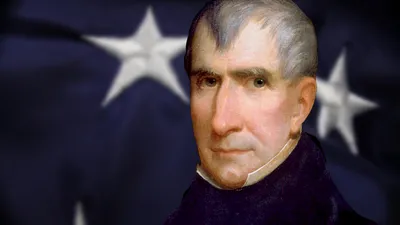
marydilip.info – William Henry Harrison, the 9th President of the United States, is often remembered for his incredibly brief presidency, lasting only 31 days. However, his rise to the nation’s highest office was anything but brief. Harrison’s journey from a soldier on the front lines to the White House is a fascinating tale of military service, political ambition, and the complexities of early American life. His military prowess, political savvy, and personal character shaped much of his legacy, and his path to the presidency reveals much about the era in which he lived.

Early Life and Background

William Henry Harrison was born on February 9, 1773, in Berkeley Plantation, Virginia, into a family with a rich political heritage. His father, Benjamin Harrison V, was a signer of the Declaration of Independence and later served as Governor of Virginia. The Harrison family was well-connected, providing William Henry with a privileged upbringing, yet his early life was one of transition and change.

Harrison’s formal education began at the College of New Jersey (now Princeton University), though he did not finish his studies there. Instead, at the age of 18, Harrison left school to pursue a career in medicine, training under a local physician. However, his path would soon take a different turn when he was offered a commission in the United States Army in 1791 during the Northwest Indian War, which would become the beginning of his military career.

The Military Career: Soldiering on the Front Lines

Harrison’s decision to join the army was influenced by the opportunity to serve his country and defend its frontier. In 1791, at the age of 18, he was appointed an ensign in the U.S. Army, and he quickly proved himself as a capable officer. His early service was marked by his involvement in the struggles against Native American tribes in the Ohio River Valley, a region that was central to the United States’ expansion.

Harrison’s first notable military engagement came during the campaign to retake the western territories from Native American control. In 1794, he was promoted to lieutenant and was stationed at Fort Washington (present-day Cincinnati), where he became deeply involved in the ongoing conflicts. He fought in the Battle of Fallen Timbers, a pivotal victory that secured American control over the Northwest Territory. This success established Harrison as a rising military star.

The Battle of Tippecanoe and National Recognition

Harrison’s military career reached its pinnacle in 1811 during the War of 1812. Before the war formally broke out, Harrison, who by then was the Governor of the Indiana Territory, became involved in a series of conflicts with Native American tribes who opposed American expansion. The most significant of these was the Battle of Tippecanoe, fought on November 7, 1811.

In the early 1800s, Tecumseh, a Shawnee chief, had united several Native American tribes in the region to resist American encroachment. His brother, Tenskwatawa (the Prophet), led a spiritual movement against the American settlers. In response to these growing tensions, Harrison led an expedition to confront the Native Americans at Tippecanoe, a settlement in what is now Indiana. The ensuing battle was fierce, and although Harrison’s forces won, the battle was costly in terms of casualties and its aftermath.

The victory at Tippecanoe made Harrison a national hero and earned him the moniker “Old Tippecanoe.” The battle’s significance, combined with his military service, propelled Harrison into the national spotlight. It also set the stage for his future political career, as he became a symbol of American expansion and military prowess.

Political Rise and the Indiana Territory

Harrison’s military success helped launch his political career. In 1800, President John Adams appointed him as the Governor of the Indiana Territory, a position he would hold for over a decade. As governor, Harrison’s primary role was overseeing the settlement of American land and managing relations with Native American tribes. His work in this capacity helped open up the frontier to American settlers and solidified his reputation as a capable administrator.

Harrison’s tenure as governor was marked by his persistent efforts to negotiate land treaties with Native American tribes, although many of these agreements were often contentious. He presided over the formation of several new states in the western frontier, including Indiana, which achieved statehood in 1816.

During his time in the Indiana Territory, Harrison’s political ambitions began to take shape. He won election to the U.S. House of Representatives in 1816 and served a term in Congress, where he began to align himself with the interests of land expansion, the American frontier, and the protection of settlers’ rights.

The 1820s and 1830s: Harrison’s Political Return

After a brief period out of the national spotlight, Harrison returned to political life in the 1820s and 1830s. He was elected to the U.S. Senate in 1824, where he joined the ranks of prominent Whigs such as Henry Clay and Daniel Webster, advocating for internal improvements, a strong national bank, and protective tariffs. His time in Washington was marked by his ability to forge political alliances and appeal to the interests of the growing Western and Southern territories.

Harrison’s political positions, especially his advocacy for expansion and economic growth, earned him respect among both Whigs and many Democratic-Republicans. He ran for the presidency in 1836, but his efforts were thwarted by the incumbent, Martin Van Buren. However, Harrison’s political resilience and growing popularity would set the stage for his final and most successful presidential campaign.

The 1840 Presidential Election: A Remarkable Comeback

By 1840, Harrison was a seasoned politician with decades of experience. His reputation as a military hero and statesman was well established, and he decided to run for president once again. The Whig Party, eager to challenge Van Buren’s administration, nominated Harrison to run for president. At 67 years old, he was the oldest presidential candidate in history at the time, which became a key talking point during the election.

Harrison’s campaign strategy was centered around his image as a man of the people. The Whigs presented him as a humble frontiersman who had lived a simple, rugged life, in contrast to Van Buren, who was portrayed as an out-of-touch aristocrat. The campaign slogan “Tippecanoe and Tyler Too,” referring to his military victory at Tippecanoe and his running mate, John Tyler, resonated with the public. The campaign utilized new tactics, such as mass rallies, parades, and slogans, which were innovative for their time.

The 1840 election was one of the first to employ modern political campaign techniques, and Harrison triumphed over Van Buren in a landslide, winning both the popular and electoral vote. His victory marked the first time the Whig Party captured the presidency.

The Presidency and Its Tragic End

Harrison’s presidential inauguration took place on March 4, 1841, and he made history as the oldest man to become president at the time. His inauguration was a grand affair, with Harrison delivering one of the longest inaugural addresses in American history. However, the cold and windy weather that day took a toll on Harrison’s health. He contracted a severe cold, which quickly developed into pneumonia.

Just 31 days into his presidency, on April 4, 1841, Harrison succumbed to his illness and passed away, making his term the shortest in U.S. history. His sudden death led to a constitutional crisis, with questions about the legitimacy of Vice President John Tyler’s assumption of the presidency.

Legacy: A Heroic, Yet Brief Presidency

Though his presidency was cut short, William Henry Harrison’s legacy endures in American history. He is remembered as a military hero and a symbol of American expansion and perseverance. His death marked a turning point in the understanding of presidential succession and the nation’s political practices. The clarity that followed regarding the procedures for replacing a deceased president would ultimately lead to the passage of the 25th Amendment in 1967.

Harrison’s journey from soldier to president reflects the themes of early American life—struggles for expansion, the importance of military leadership, and the emergence of populist politics. His brief time in office and his legacy as a war hero made him a lasting figure in the annals of U.S. history.

George Washington: President of the Constitutional Convention

marydilip.info – George Washington, often referred to as the “Father of His Country,” was a key figure in the formation of the United States of America. While his role as the first President of the United States is well-known, his influence as the President of the Constitutional Convention of 1787 is equally significant. Washington’s leadership during the convention helped shape the United States Constitution, the foundational document that continues to govern the nation today. His wisdom, steadiness, and dedication to the principles of liberty and union were pivotal in guiding the delegates through the process of creating a new government.

The Context Leading to the Constitutional Convention

The Weaknesses of the Articles of Confederation

By the mid-1780s, the United States was struggling under the Articles of Confederation, the first constitution of the country. While the Articles had been instrumental in uniting the colonies during the Revolutionary War, they proved inadequate in providing the framework for a functional national government. The Articles created a weak central government, leaving most power in the hands of the states. This lack of centralized authority led to a host of problems, including economic instability, interstate conflicts, and an inability to defend the country against external threats.

As the United States faced mounting challenges, it became clear that the Articles of Confederation were no longer sufficient. Calls for reform grew louder, and in 1786, a meeting was held in Annapolis, Maryland, to address the issues with the Articles. However, the Annapolis Convention was poorly attended, and it was decided that a larger meeting would be necessary to address the broader question of how to improve the structure of the government.

The Call for a Constitutional Convention

In 1787, the Continental Congress called for a Constitutional Convention to be held in Philadelphia to revise the Articles of Confederation. However, the delegates to the convention quickly realized that simply amending the Articles was not enough. The challenges facing the country required the creation of an entirely new governing framework. This decision would pave the way for the drafting of the United States Constitution, a document that would replace the Articles and establish the structure of the new federal government.

Washington’s name was immediately associated with the Convention, due to his immense popularity, experience, and the respect he had earned throughout the Revolutionary War. He was seen as the figure who could unite the delegates and give legitimacy to the process of creating a new government.

Washington’s Role as President of the Constitutional Convention

Unanimous Election as President

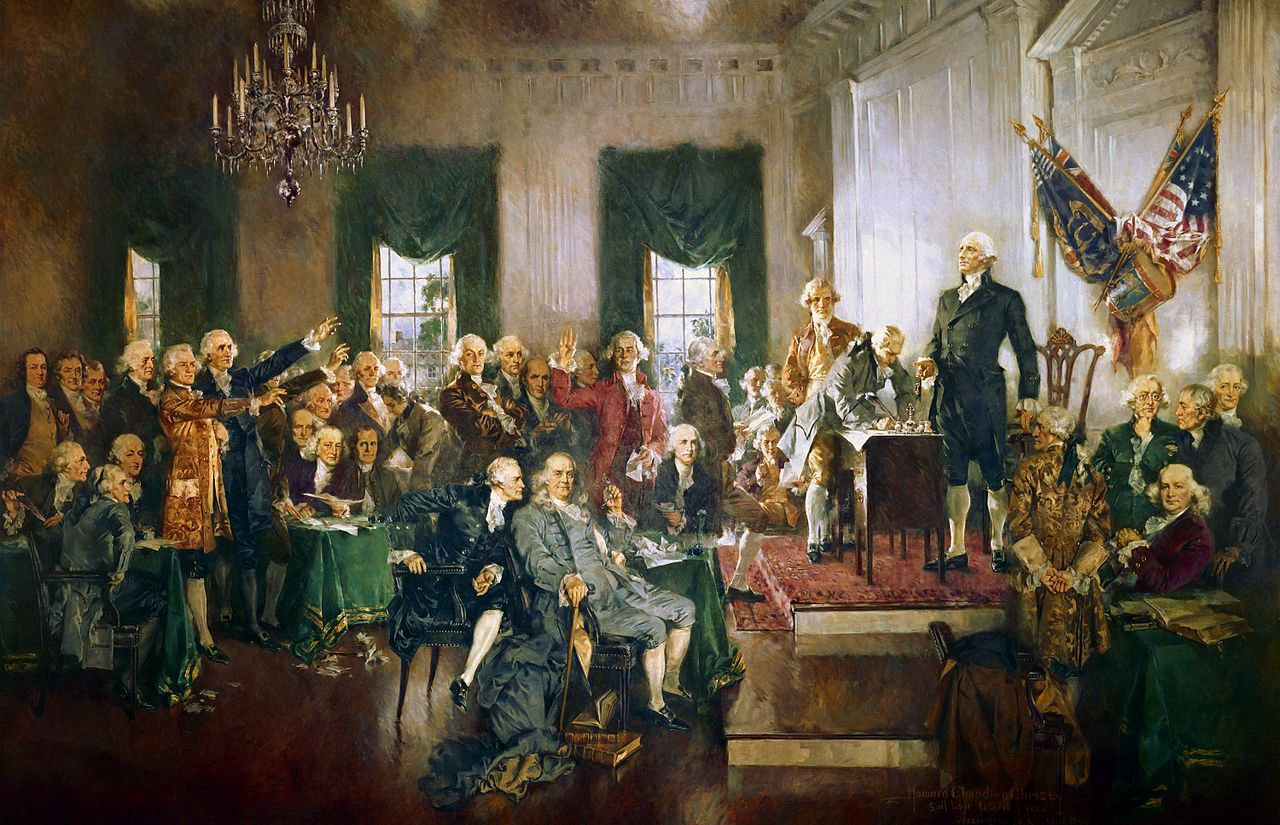
When the Constitutional Convention convened in Philadelphia on May 25, 1787, George Washington was unanimously elected to serve as the president of the convention. Washington’s election was a clear signal of the importance of his leadership in this process. Despite being deeply committed to his personal life at Mount Vernon, Washington understood the gravity of the situation and agreed to preside over the convention.

The role of the president of the Constitutional Convention was largely ceremonial, but Washington’s influence was immeasurable. As president, he helped maintain order and decorum during the often contentious debates. His presence also ensured that the proceedings were conducted in an atmosphere of unity and purpose, which was crucial for the success of the convention.

Washington’s Leadership and Character

Washington’s leadership style at the Constitutional Convention was marked by patience, humility, and a deep sense of responsibility. He was not one to dominate discussions, but rather, he listened carefully to the arguments presented by the delegates. Washington’s role was to facilitate the process, ensuring that all viewpoints were heard and that the delegates remained focused on their shared goal of creating a new government.

Washington’s calm demeanor and steady hand provided a stabilizing influence during a time of great uncertainty. The delegates were acutely aware of the high stakes involved, and Washington’s reputation for honesty, integrity, and leadership served as a guiding light. Though he did not contribute to the drafting of the Constitution as extensively as some of the more politically engaged delegates, such as James Madison and Alexander Hamilton, Washington’s presence lent moral authority to the convention and its final product.

Maintaining Unity Amidst Disagreements

One of Washington’s key challenges as president of the convention was managing the diverse interests and views of the delegates. The Convention was fraught with disagreements, particularly between delegates from large and small states, and between those who favored a strong central government and those who advocated for state sovereignty.

For example, the debate over the structure of the new government’s legislature was contentious. Larger states, such as Virginia, wanted representation based on population, while smaller states, such as New Jersey, argued for equal representation for each state. This disagreement led to the creation of the “Great Compromise,” which established a bicameral legislature with the Senate (where each state would have equal representation) and the House of Representatives (where representation would be based on population).

Throughout the Convention, Washington encouraged compromise and emphasized the need for unity. His ability to keep the proceedings civil and focused on the common goal of creating a workable government was critical to the success of the Convention.

The Final Product: The United States Constitution

After four months of heated debate, deliberation, and compromise, the Constitutional Convention concluded its work on September 17, 1787, with the signing of the United States Constitution. The document outlined the structure of the federal government, including the separation of powers into three branches (executive, legislative, and judicial) and the creation of a system of checks and balances to ensure no one branch became too powerful.

Washington’s role in the success of the Convention cannot be overstated. His leadership was instrumental in maintaining the Convention’s momentum, fostering compromise, and ensuring that the delegates remained committed to the creation of a unified government. Though Washington did not directly contribute to the writing of the Constitution, his role as president of the Convention was essential in shaping the document and ensuring its eventual success.

Washington’s Advocacy for the Constitution

The Push for Ratification

Following the conclusion of the Constitutional Convention, Washington was a staunch advocate for the ratification of the Constitution. He recognized that the document was far from perfect, but he believed that it was the best option for the fledgling nation. Washington’s support was crucial in garnering support for the Constitution among the states.

As the nation debated whether to adopt the Constitution, Washington’s voice carried immense weight. He wrote letters and publicly expressed his support for the document, urging Americans to embrace the new system of government. Washington’s endorsement was seen as a powerful endorsement of the Constitution’s legitimacy and necessity.

Washington’s Role in the First Presidency

The success of the Constitutional Convention and the eventual ratification of the Constitution led to the establishment of a new government, with Washington elected as its first President in 1789. Washington’s leadership during the Constitutional Convention had prepared him for this new role, and he approached the presidency with the same sense of duty and responsibility that had characterized his actions at the Convention.

Legacy of Washington’s Leadership at the Constitutional Convention

A Vision for a Strong, Unified Nation

Washington’s role as President of the Constitutional Convention left an enduring legacy in the formation of the United States. His leadership helped guide the country toward the creation of a government based on the principles of democracy, republicanism, and federalism. By ensuring that the Convention remained focused on its central goal—creating a government capable of uniting the states and securing liberty—Washington set the stage for the success of the new nation.

Washington’s emphasis on unity, compromise, and prudence during the Constitutional Convention mirrored the qualities he would later display as the first President of the United States. His calm demeanor and commitment to the common good ensured that the nation’s first attempt at self-governance would be a lasting success.

The United States Constitution: A Lasting Legacy

The Constitution, born out of the deliberations at the Constitutional Convention, has remained the foundation of American government for over two centuries. Washington’s role in its creation cemented his place in history as one of the most important figures in American governance. His leadership during the Convention, coupled with his subsequent service as the first President, solidified his reputation as a visionary who played a key role in establishing the nation’s democratic ideals.