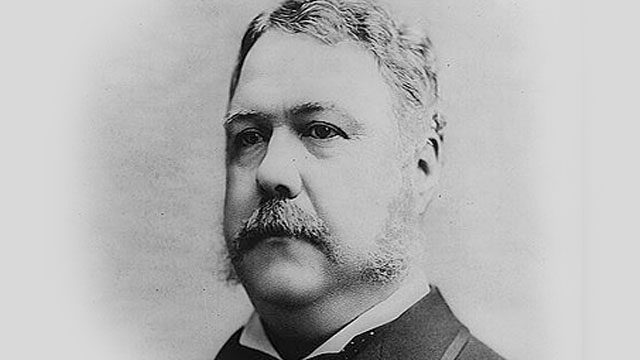
marydilip.info – Chester A. Arthur, the 21st president of the United States, remains one of the most enigmatic figures in American history. Although his presidency was short—lasting from 1881 to 1885—Arthur’s political journey from a New York political machine boss to a reform-oriented president is nothing short of remarkable. Often overshadowed by more well-known figures of the Gilded Age, such as Theodore Roosevelt and Grover Cleveland, Arthur’s time in office was full of contradictions that left many historians puzzled. Once viewed as an opportunistic politician with deep ties to the corrupt patronage system, Arthur underwent a transformation that would redefine his legacy and reshape American governance.
This article delves into the complex nature of Chester A. Arthur’s presidency, exploring his early career, the surprising shifts in his political philosophy, and his contributions to American politics and reform. Despite his initial connections to political machines, Arthur became a key figure in civil service reform, military modernization, and the professionalization of the U.S. government. His presidency, though brief, was transformative not only for the nation but also for Arthur himself, who evolved from a product of corruption to a surprising advocate for change.
Early Life and Political Beginnings: The Making of a Machine Politician
Humble Beginnings and Legal Career
Born on October 5, 1829, in Fairfield, Vermont, Chester Alan Arthur came from humble beginnings. His father, William Arthur, was a Baptist minister who moved the family several times during Chester’s early years. The family eventually settled in North Pownal, where Chester attended local schools. His academic ability was apparent early on, and he went on to attend Union College in Schenectady, New York. Graduating in 1848 near the top of his class, Arthur turned to law and began practicing in New York City.
While Arthur’s legal career was successful, it was in politics that he would make his most significant mark. The 1850s and 1860s were a time of intense political maneuvering in New York, and Arthur’s rising ambition drew him into the heart of the political machine. It was during this period that Arthur became involved with the Stalwarts, the faction of the Republican Party aligned with Senator Roscoe Conkling, who was a powerful political boss. The Stalwarts supported the spoils system, where government positions were awarded to political supporters rather than on merit.
In 1868, Arthur was appointed to a key position as the Collector of the Port of New York, a job that gave him control over appointments to vital government positions. The position also made him deeply entwined with the corrupt practices of the time. While Arthur was known for being an efficient administrator, his political connections and loyalty to Conkling led many to view him as a product of the system of political patronage.
Rise through the Political Machine
Arthur’s success in the New York political machine was built on his loyalty to Conkling and his ability to navigate the intricacies of patronage. As Collector of the Port, Arthur gained a reputation for his organizational skills, but his role in the distribution of government jobs also linked him to the corrupt practices of the era. The Stalwart faction of the Republican Party, which Arthur was a part of, was dedicated to maintaining the spoils system and resisting the reform efforts of the more moderate Half-Breeds.
Arthur’s political career seemed to be on a predictable path: he would remain a loyal servant of the machine, reaping the rewards of patronage and consolidating power within the Republican Party. However, Arthur’s story took an unexpected turn in 1880 when he was nominated for the vice-presidency under the candidacy of James A. Garfield.
A Surprising Ascension: From Political Boss to President
The Republican National Convention of 1880
Arthur’s nomination as vice president was the result of political calculations rather than any expectation of his personal contribution. The Republican Party was divided between the Stalwarts, led by Conkling, and the more moderate Half-Breeds, who sought reforms within the party. In a bid to unite the two factions, Arthur was chosen as Garfield’s running mate. While Garfield was a moderate who sought to address the issue of patronage, Arthur was seen as a staunch defender of the Stalwarts and the traditional system of political patronage.
Although Arthur’s nomination was largely seen as a compromise, no one could have anticipated how quickly he would ascend to the presidency. In July 1881, just months after taking office, President Garfield was shot by an assassin named Charles Guiteau. Garfield’s death in September 1881 led to Arthur assuming the presidency, and the transition from political boss to president was one of the most startling developments in American political history.
Initial Doubts about Arthur’s Leadership
Arthur’s rise to the presidency was met with skepticism, both from his political opponents and from those who had once supported him. Given his deep ties to the patronage system, many feared that his presidency would simply be a continuation of the corrupt practices of his predecessors. Some viewed Arthur as little more than a puppet of the Stalwarts, who would continue to reward political loyalty with government jobs rather than promoting merit and efficiency in government.
However, as Arthur began his presidency, it became clear that he was more than just a tool of the political machine. His presidency would prove to be one of surprising transformation.
The Transformation: A President of Reform
Embrace of Civil Service Reform
The most significant and unexpected aspect of Chester A. Arthur’s presidency was his transformation into a proponent of civil service reform. Arthur’s initial connection to the spoils system and political patronage made his later support for reform all the more surprising. However, the growing public outcry over the inefficiency and corruption associated with patronage created pressure for change, and Arthur responded.
In 1883, Arthur threw his support behind the Pendleton Civil Service Reform Act, which sought to establish a merit-based system for federal government jobs. The Pendleton Act created the Civil Service Commission, which would oversee the examination and hiring process for government employees. The law marked a dramatic break from the spoils system, and it was one of the most important pieces of reform legislation of the Gilded Age.
Arthur’s decision to support the Pendleton Act was a bold move, and it demonstrated that he was willing to put the needs of the country ahead of the political system that had helped him rise to power. The Pendleton Act helped to professionalize the federal workforce, ensuring that government jobs were awarded based on qualifications rather than political loyalty.
Other Reform Efforts and Achievements
In addition to the Pendleton Act, Arthur’s presidency was marked by other key reform efforts. One area where Arthur made a significant impact was in the modernization of the U.S. Navy. Recognizing the need for a strong military to support American interests abroad, Arthur oversaw the construction of new steel-hulled warships and the expansion of the Navy. Under his leadership, the U.S. began to modernize its military infrastructure, setting the stage for future American naval dominance.
Arthur’s presidency also saw progress in infrastructure development, including the completion of the transcontinental railroad and the expansion of the nation’s transportation network. These efforts were vital for the continued growth of the United States and its integration into the global economy.
The Legacy: A President Who Defied Expectations
Reconstructing Arthur’s Reputation
Chester A. Arthur’s legacy was not fully appreciated during his time in office, and it was not until later that historians began to reassess his contributions. For much of the 20th century, Arthur was seen as a placeholder, a political boss who had ascended to the presidency through circumstance rather than merit. His association with the patronage system led many to dismiss him as just another example of the corruption of the Gilded Age.
However, as scholars and historians delved deeper into Arthur’s presidency, they began to recognize the complexities of his character and his leadership. Arthur’s support for civil service reform, his efforts to modernize the U.S. Navy, and his focus on improving government efficiency began to receive the attention they deserved. Today, Chester A. Arthur is viewed as a president who defied expectations and worked to transform the U.S. government for the better.
An Unlikely Reformer
Arthur’s presidency is a study in political transformation. His rise from a political machine boss to a reform-minded president reflects a broader shift in American politics during the Gilded Age. While Arthur may not have been a charismatic figure like some of his contemporaries, his pragmatic approach to governance and his willingness to embrace reform made him an effective leader during a time of political and economic upheaval.
Arthur’s embrace of civil service reform, in particular, was a crucial turning point in American history. It helped to pave the way for a more professional and efficient federal government, reducing the influence of patronage and corruption that had long plagued Washington, D.C. His contributions to the modernization of the military and infrastructure also laid the foundation for future American growth and power on the global stage.
Conclusion: The Enigma of Chester A. Arthur
Chester A. Arthur’s presidency remains one of the most enigmatic chapters in American history. From his rise as a political boss in New York to his surprising embrace of reform as president, Arthur’s career defied expectations and left a lasting impact on American politics. Although his presidency was short, it was marked by important achievements that transformed the U.S. government and helped set the stage for the future development of the nation.
Arthur’s legacy is a reminder that political leaders are not always defined by their early associations or backgrounds. As president, he defied the odds and proved that even a product of the corrupt political machine could become a force for positive change. Today, Chester A. Arthur is increasingly seen as a president who, through his surprising transformation, left a lasting imprint on the nation he led.

