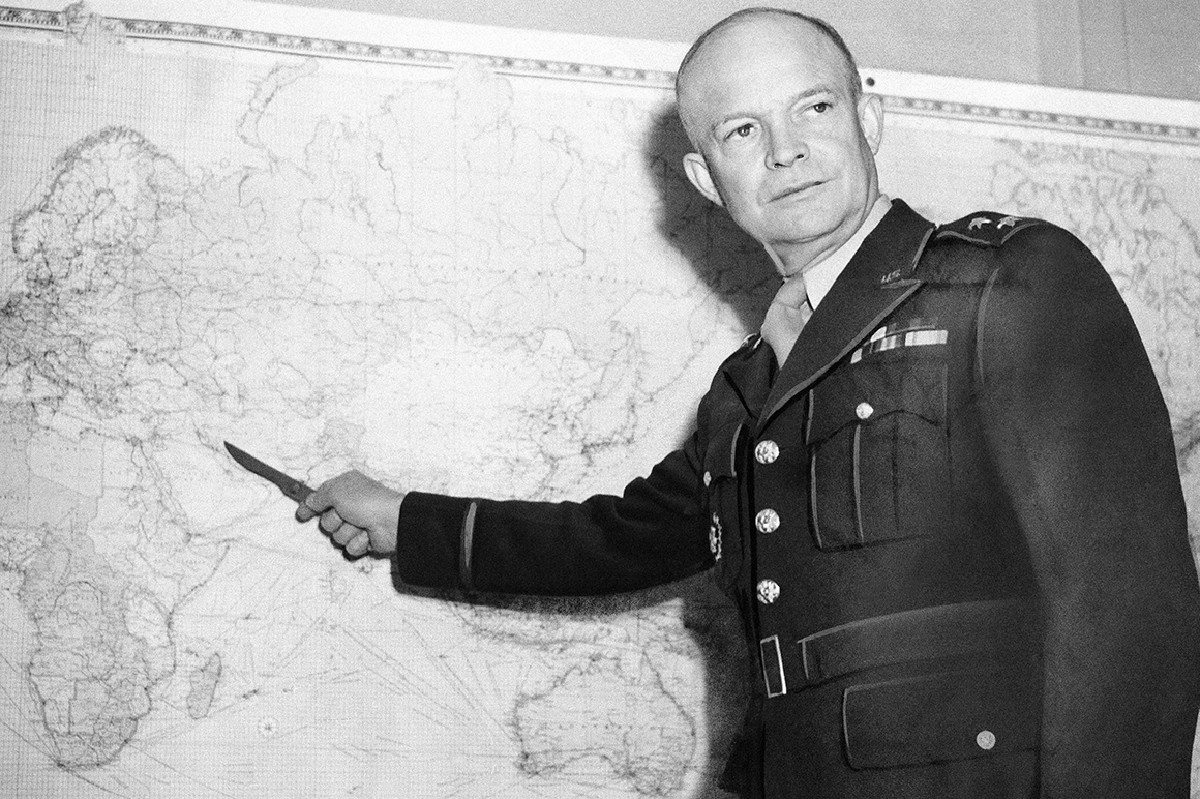
Dwight D. Eisenhower: Commander of Allied Forces in World War II

marydilip.info – Dwight D. Eisenhower is a name synonymous with leadership, strategy, and military brilliance. As the Supreme Commander of the Allied Expeditionary Force during World War II, his leadership would help reshape the course of history and lead the Allies to victory. Eisenhower’s role in the war was not just about his tactical genius on the battlefield but also his ability to unite diverse nations, coordinate complex operations, and lead under immense pressure. Let’s take a closer look at Eisenhower’s journey during World War II and why he remains one of the most respected military figures in history.

Eisenhower’s Rise to Military Leadership

Born in 1890 in Denison, Texas, Dwight D. Eisenhower had a modest upbringing. After attending the U.S. Military Academy at West Point, Eisenhower’s early career in the army saw him stationed in various locations, including the Philippines and Panama. Although he wasn’t immediately thrust into high-profile roles, Eisenhower’s talent for leadership began to shine through. His ability to plan strategically, his diplomatic skills, and his calm demeanor under pressure quickly gained the respect of his peers.

By the time World War II broke out in 1939, Eisenhower was a seasoned officer. His strategic thinking and organizational skills led him to become a key figure in the American military. In 1942, Eisenhower was appointed to head the planning of Allied operations in Europe. It was a role that would cement his place as one of the most important military leaders of the 20th century.

Supreme Commander of the Allied Expeditionary Force

Eisenhower’s appointment as Supreme Commander of the Allied Expeditionary Force in 1943 marked a critical moment in World War II. The role required overseeing all Allied military operations in Europe and coordinating the efforts of nations with vastly different cultures, languages, and military strategies. The complexity of this position cannot be overstated.

Eisenhower’s leadership style was characterized by his ability to foster cooperation and collaboration among the Allied nations. The United Kingdom, the United States, and other nations involved in the war had different priorities and military traditions, and Eisenhower had to manage these differences while keeping the overall mission in mind. His diplomatic skills were as crucial as his military ones.

The Planning and Execution of D-Day

Perhaps the most iconic moment of Eisenhower’s career came with the planning and execution of the D-Day invasion on June 6, 1944. The operation, code-named Operation Overlord, was the largest amphibious invasion in history, involving over 156,000 Allied troops landing on the beaches of Normandy, France. The success of D-Day was critical in turning the tide of the war in Europe.

As Supreme Commander, Eisenhower was responsible for orchestrating the entire operation. The planning was immense, involving a staggering amount of logistics, intelligence gathering, and coordination between nations. Eisenhower had to balance the demands of the British and American military, manage the timing of the invasion, and ensure that all aspects, from air support to naval operations, were aligned.

On the night before the invasion, Eisenhower prepared a letter to be issued in case the mission failed, taking full responsibility for the operation’s outcome. His leadership under pressure was a testament to his calm demeanor and unwavering sense of duty.

When the operation succeeded and the Allies secured a foothold in France, Eisenhower’s place in history was solidified. The success of D-Day was a decisive blow to Nazi Germany, and it marked the beginning of the liberation of Western Europe.

Post-D-Day Leadership: Pushing Toward Victory

Following the success of D-Day, Eisenhower continued to lead the Allied forces through the subsequent campaigns in France, Belgium, and Germany. He oversaw the liberation of Paris and coordinated the push toward the heart of Nazi Germany. As the Allies advanced, Eisenhower faced the challenge of maintaining morale, coordinating logistics, and managing the delicate political situation in the newly liberated countries.

Eisenhower’s leadership during this period was marked by his emphasis on unity and his ability to make tough decisions. While the military operations were challenging, the political landscape was just as complicated. Eisenhower worked closely with leaders like British Prime Minister Winston Churchill and French leader Charles de Gaulle to ensure that the Allies remained united. His careful handling of international relations was instrumental in maintaining a united front as they closed in on Berlin.

The End of the War and the Legacy of Eisenhower

By May 1945, after years of intense fighting, the Allies had successfully defeated Nazi Germany. On May 7, 1945, Germany surrendered unconditionally, and the war in Europe was over. Eisenhower’s role in the defeat of Hitler’s regime was one of the most significant accomplishments of the war. His strategic genius, diplomatic ability, and leadership skills had brought together a diverse group of nations to achieve a common goal.

Following the war, Eisenhower’s status as a national hero was unquestioned. He became a symbol of military and political leadership, revered not just in the United States but across the world. His ability to lead during the darkest days of war and his role in the Allied victory made him one of the most respected figures of the 20th century.

Eisenhower’s Legacy: Leadership Beyond the Battlefield

Eisenhower’s time as the Supreme Commander of the Allied Expeditionary Force was just the beginning of his lasting legacy. His leadership during World War II set the foundation for his future career as the 34th President of the United States, where his military experience continued to influence his decision-making.

At marydilip.info, we examine figures like Eisenhower to understand how military leadership and strategic thinking can transcend the battlefield and shape the course of history. Eisenhower’s ability to navigate complex political and military landscapes, his calm under pressure, and his skill in forging alliances made him one of the most effective military commanders the world has ever known.

Today, Eisenhower is remembered not only as a brilliant military strategist but also as a leader who embodied the qualities of responsibility, diplomacy, and resilience—qualities that continue to inspire leaders in all fields. His role in World War II is a testament to the impact one individual can have in shaping the course of history, and his legacy lives on in the strategic principles he championed.
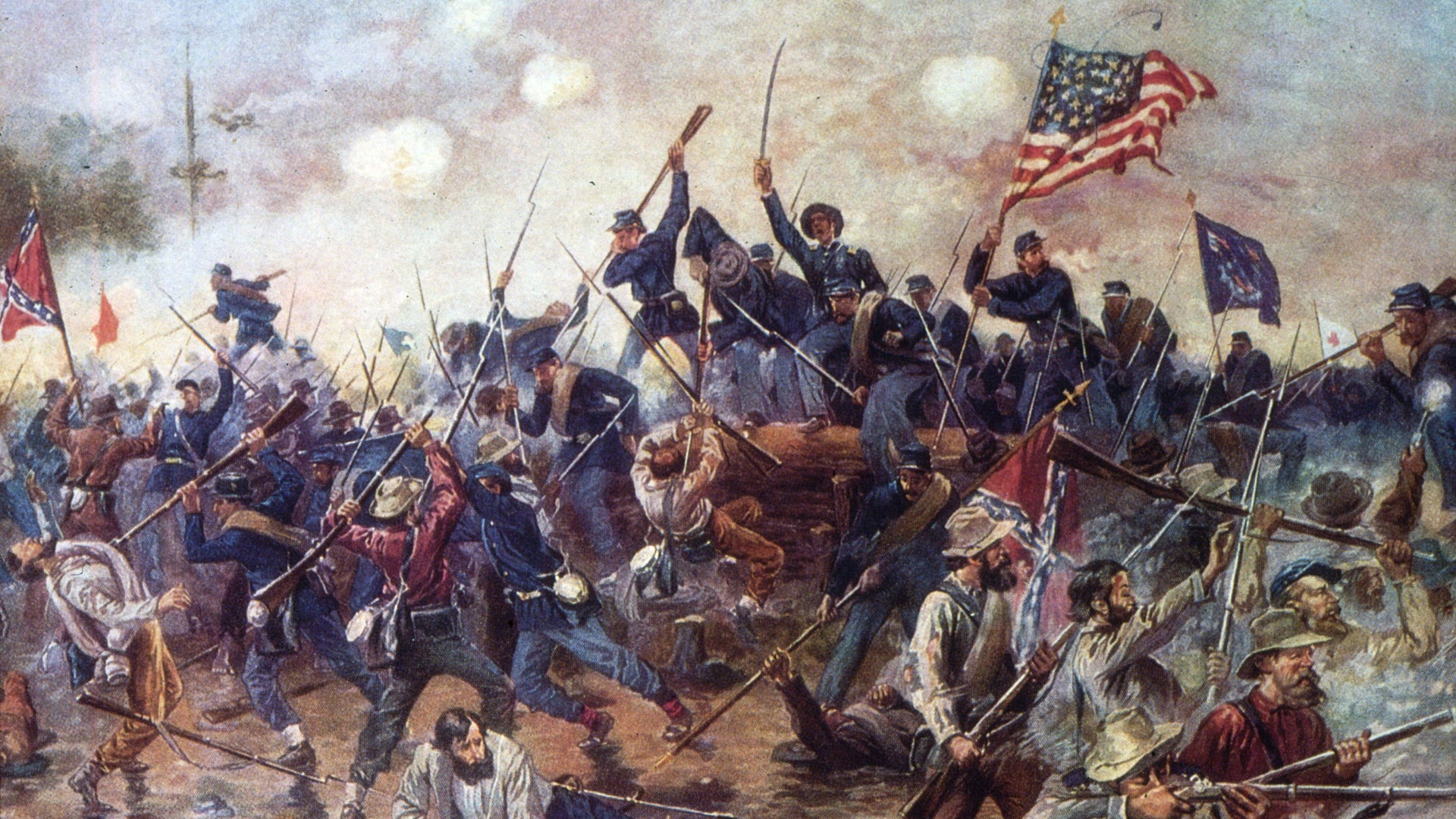
A Divided Nation: James Buchanan and the Prelude to Civil War

marydilip.info – James Buchanan, the 15th President of the United States, served from 1857 to 1861 during one of the most tumultuous periods in American history. His presidency was a time when the nation, already deeply divided by issues such as slavery, states’ rights, and westward expansion, found itself on the brink of a devastating civil conflict. Buchanan’s inability to prevent the secession of Southern states and his failure to reconcile the growing rift between North and South left a nation teetering on the edge of civil war. His presidency is often remembered as one of missed opportunities—times when decisive action could have steered the country away from conflict. Instead, Buchanan’s leadership in the face of a divided nation is widely seen as weak, indecisive, and ultimately ineffective in averting the Civil War.

This article examines the political, social, and economic factors that contributed to the disunion of the United States during Buchanan’s presidency, exploring how his actions—or lack thereof—shaped the prelude to the Civil War. It delves into the key events and decisions that defined his presidency, including the Dred Scott decision, the issue of slavery in the territories, the crisis in Kansas, and the secession of Southern states. In the end, Buchanan’s legacy is one of a leader who failed to heal a fractured nation, leaving the task of preserving the Union to his successor, Abraham Lincoln.

The National Crisis: Slavery, Expansion, and the Fragile Union

Buchanan entered the presidency in 1857 at a time when the United States was a nation at odds with itself. The debate over slavery was intensifying, especially as new territories were being opened up in the West. The question of whether these territories would allow slavery was a fundamental issue that threatened to tear the country apart. By the time Buchanan assumed office, sectionalism had already reached a boiling point, with the South firmly defending the institution of slavery and the North increasingly opposed to its expansion.

The Kansas-Nebraska Act of 1854 had opened the door to the expansion of slavery into the western territories, allowing settlers in these territories to determine whether they would allow slavery through the doctrine of popular sovereignty. While this was intended to provide a compromise between pro-slavery and anti-slavery forces, it only deepened the divide. The violence that erupted in Kansas, known as Bleeding Kansas, demonstrated the explosive potential of the issue, with pro-slavery and anti-slavery factions clashing violently as they fought for control of the territory.

Buchanan, a moderate Democrat, sought to navigate this growing national crisis by maintaining a fragile balance between Northern and Southern interests. His primary goal was to preserve the Union, but his adherence to a strict interpretation of the Constitution, his defense of states’ rights, and his unwillingness to confront the moral dimensions of slavery made him a leader ill-suited to the task of navigating the sectional tensions that were tearing the nation apart.

The Dred Scott Decision: A Step Toward National Division

One of the most consequential events of Buchanan’s presidency was the Dred Scott v. Sanford decision in 1857. The case involved Dred Scott, an enslaved African American man who sued for his freedom after living in free territories with his master. The Supreme Court, led by Chief Justice Roger Taney, ruled against Scott, declaring that African Americans, whether enslaved or free, could not be citizens of the United States and that Congress had no authority to prohibit slavery in the territories.

Buchanan, who had long been sympathetic to Southern interests, supported the decision, believing it would resolve the issue of slavery and restore peace between the North and South. However, the ruling had the opposite effect. It angered many in the North, who viewed it as a blatant attempt to extend the institution of slavery into new territories. The decision further polarized the nation, leading to greater sectional animosity and raising questions about the moral and legal legitimacy of slavery. Buchanan’s support for the decision alienated Northern Democrats and fueled the growing abolitionist movement.

The Dred Scott decision cemented the divisions between pro-slavery and anti-slavery factions, and it provided a legal foundation for the South’s demand for the extension of slavery into the western territories. However, it did little to quell the violence in Kansas or prevent the growing public outcry in the North. Buchanan’s failure to recognize the broader implications of the ruling demonstrated his inability to adapt to the rapidly changing political landscape.

The Kansas Crisis: Bleeding Kansas and the Failure of Popular Sovereignty

The issue of slavery in the territories reached a fever pitch in Kansas, where the Kansas-Nebraska Act had opened the door for settlers to decide whether slavery would be permitted. The result was a violent conflict between pro-slavery and anti-slavery factions, each seeking to control the new territory. The violence that erupted in Kansas became known as Bleeding Kansas, and it demonstrated the dangers of trying to resolve the slavery issue through popular sovereignty.

Buchanan, who had been a strong proponent of popular sovereignty, attempted to resolve the situation by supporting the Lecompton Constitution, which would have admitted Kansas as a slave state. This move was met with resistance from many in the North, who argued that the constitution had been drafted by pro-slavery forces in an undemocratic manner. The issue of whether Kansas would join the Union as a free state or a slave state became a major point of contention, with Buchanan backing the pro-slavery Lecompton Constitution despite the opposition from many of his fellow Democrats.

The Lecompton Constitution was ultimately rejected by Congress, and Kansas remained a battleground for pro-slavery and anti-slavery forces. Buchanan’s handling of the situation in Kansas revealed his inability to reconcile the competing interests of the North and South, and his attempt to impose a solution from the top down only deepened the sectional divide. The violence and turmoil in Kansas became a microcosm of the larger national crisis, highlighting the failure of popular sovereignty as a means of resolving the slavery issue.

The Secession Crisis: The Unraveling of the Union

As Buchanan’s presidency neared its end, the country was on the verge of disintegration. The election of Abraham Lincoln in 1860, a candidate who opposed the expansion of slavery into the territories, was the final straw for many Southern states. Lincoln’s victory, achieved without carrying a single Southern state, convinced many in the South that their way of life was under threat, and they began to take steps toward secession.

South Carolina was the first state to secede from the Union on December 20, 1860, followed by several other Southern states in the months that followed. Buchanan, however, remained indecisive in the face of secession. He declared that secession was illegal, but he also argued that the federal government had no authority to stop it. Buchanan’s belief in a limited role for the federal government and his commitment to the Constitution led him to take a passive approach, believing that the Southern states would eventually return to the Union on their own.

Buchanan’s inaction in the face of secession was one of the most significant failures of his presidency. Rather than acting decisively to preserve the Union, he left the situation to fester. His inability to take a strong stand against secession allowed the Confederacy to solidify, and by the time Abraham Lincoln took office in March 1861, seven Southern states had already formed the Confederate States of America.

Buchanan’s legacy in this regard is one of profound failure. His refusal to take strong action during the secession crisis only hastened the collapse of the Union and paved the way for the Civil War. Buchanan believed that the Union was worth preserving, but he lacked the resolve to take the necessary steps to prevent its dissolution.

The Fort Sumter Crisis

The final crisis of Buchanan’s presidency revolved around Fort Sumter, a Union garrison in Charleston, South Carolina, that had been surrounded by Confederate forces. The Confederacy demanded the fort’s surrender, and Buchanan, caught in a web of indecision, was unable to act decisively. While he sent a supply ship to the fort, he refrained from using military force to defend the garrison, fearing that it might provoke full-scale war.

In April 1861, after Buchanan left office, Confederate forces fired on Fort Sumter, effectively starting the Civil War. Buchanan’s failure to act during the crisis left the Union vulnerable and set the stage for Lincoln’s more aggressive response once he assumed office.

Conclusion: A Divided Nation and a Divisive Presidency

James Buchanan’s presidency was marked by his inability to address the growing divisions within the United States, particularly over the issue of slavery. His actions—or lack of actions—during critical moments in the lead-up to the Civil War left the nation increasingly divided, and his failure to act decisively during the secession crisis sealed the fate of the Union.

Buchanan’s approach to the presidency was characterized by a belief in strict constitutionalism, a commitment to states’ rights, and a reluctance to use federal power to address the growing national crisis. However, his indecisiveness and failure to take strong action in response to the sectional divide left the country on the brink of collapse. Buchanan’s presidency serves as a cautionary tale of what happens when a leader is unable—or unwilling—to confront the challenges of a nation in crisis.

Ultimately, Buchanan’s legacy is one of a president who failed to prevent the Civil War, leaving the task of preserving the Union to his successor, Abraham Lincoln. As the nation descended into war, the decisions made—or avoided—during Buchanan’s presidency would echo throughout the history of the United States, reshaping the nation forever.