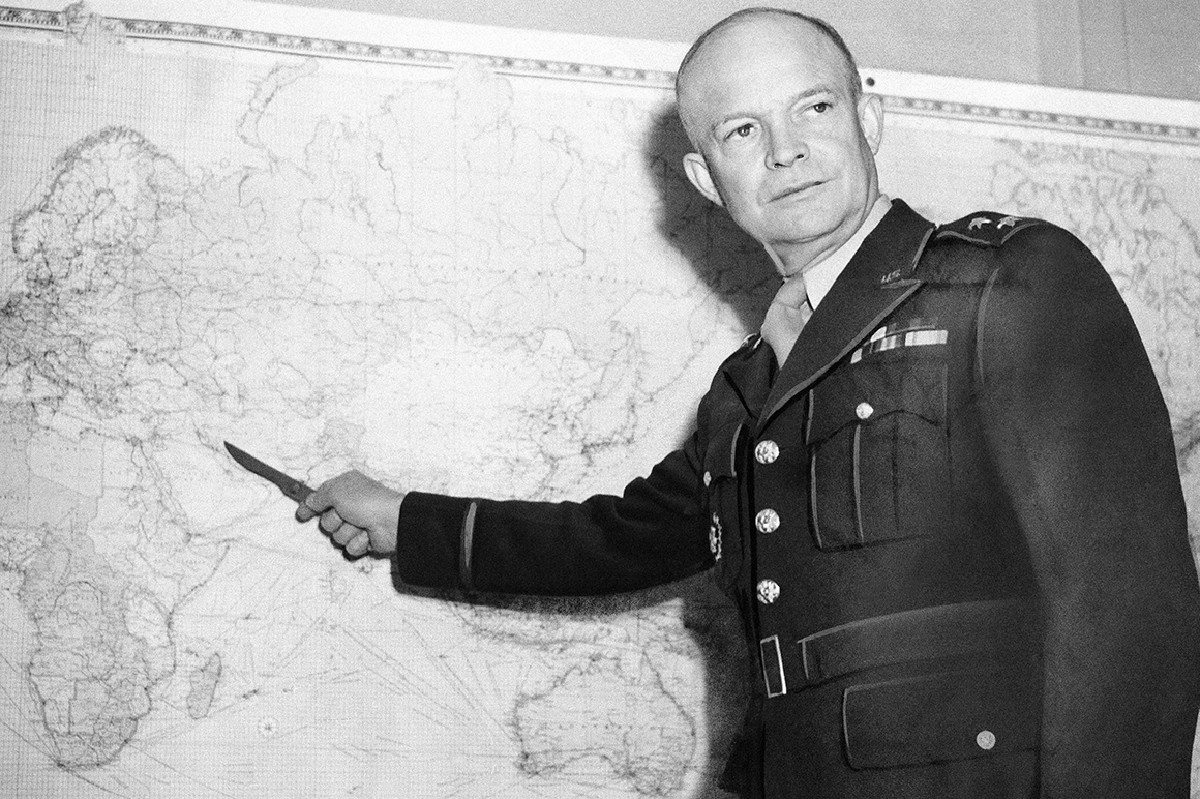
Dwight D. Eisenhower: Commander of Allied Forces in World War II

marydilip.info – Dwight D. Eisenhower is a name synonymous with leadership, strategy, and military brilliance. As the Supreme Commander of the Allied Expeditionary Force during World War II, his leadership would help reshape the course of history and lead the Allies to victory. Eisenhower’s role in the war was not just about his tactical genius on the battlefield but also his ability to unite diverse nations, coordinate complex operations, and lead under immense pressure. Let’s take a closer look at Eisenhower’s journey during World War II and why he remains one of the most respected military figures in history.

Eisenhower’s Rise to Military Leadership

Born in 1890 in Denison, Texas, Dwight D. Eisenhower had a modest upbringing. After attending the U.S. Military Academy at West Point, Eisenhower’s early career in the army saw him stationed in various locations, including the Philippines and Panama. Although he wasn’t immediately thrust into high-profile roles, Eisenhower’s talent for leadership began to shine through. His ability to plan strategically, his diplomatic skills, and his calm demeanor under pressure quickly gained the respect of his peers.

By the time World War II broke out in 1939, Eisenhower was a seasoned officer. His strategic thinking and organizational skills led him to become a key figure in the American military. In 1942, Eisenhower was appointed to head the planning of Allied operations in Europe. It was a role that would cement his place as one of the most important military leaders of the 20th century.

Supreme Commander of the Allied Expeditionary Force

Eisenhower’s appointment as Supreme Commander of the Allied Expeditionary Force in 1943 marked a critical moment in World War II. The role required overseeing all Allied military operations in Europe and coordinating the efforts of nations with vastly different cultures, languages, and military strategies. The complexity of this position cannot be overstated.

Eisenhower’s leadership style was characterized by his ability to foster cooperation and collaboration among the Allied nations. The United Kingdom, the United States, and other nations involved in the war had different priorities and military traditions, and Eisenhower had to manage these differences while keeping the overall mission in mind. His diplomatic skills were as crucial as his military ones.

The Planning and Execution of D-Day

Perhaps the most iconic moment of Eisenhower’s career came with the planning and execution of the D-Day invasion on June 6, 1944. The operation, code-named Operation Overlord, was the largest amphibious invasion in history, involving over 156,000 Allied troops landing on the beaches of Normandy, France. The success of D-Day was critical in turning the tide of the war in Europe.

As Supreme Commander, Eisenhower was responsible for orchestrating the entire operation. The planning was immense, involving a staggering amount of logistics, intelligence gathering, and coordination between nations. Eisenhower had to balance the demands of the British and American military, manage the timing of the invasion, and ensure that all aspects, from air support to naval operations, were aligned.

On the night before the invasion, Eisenhower prepared a letter to be issued in case the mission failed, taking full responsibility for the operation’s outcome. His leadership under pressure was a testament to his calm demeanor and unwavering sense of duty.

When the operation succeeded and the Allies secured a foothold in France, Eisenhower’s place in history was solidified. The success of D-Day was a decisive blow to Nazi Germany, and it marked the beginning of the liberation of Western Europe.

Post-D-Day Leadership: Pushing Toward Victory

Following the success of D-Day, Eisenhower continued to lead the Allied forces through the subsequent campaigns in France, Belgium, and Germany. He oversaw the liberation of Paris and coordinated the push toward the heart of Nazi Germany. As the Allies advanced, Eisenhower faced the challenge of maintaining morale, coordinating logistics, and managing the delicate political situation in the newly liberated countries.

Eisenhower’s leadership during this period was marked by his emphasis on unity and his ability to make tough decisions. While the military operations were challenging, the political landscape was just as complicated. Eisenhower worked closely with leaders like British Prime Minister Winston Churchill and French leader Charles de Gaulle to ensure that the Allies remained united. His careful handling of international relations was instrumental in maintaining a united front as they closed in on Berlin.

The End of the War and the Legacy of Eisenhower

By May 1945, after years of intense fighting, the Allies had successfully defeated Nazi Germany. On May 7, 1945, Germany surrendered unconditionally, and the war in Europe was over. Eisenhower’s role in the defeat of Hitler’s regime was one of the most significant accomplishments of the war. His strategic genius, diplomatic ability, and leadership skills had brought together a diverse group of nations to achieve a common goal.

Following the war, Eisenhower’s status as a national hero was unquestioned. He became a symbol of military and political leadership, revered not just in the United States but across the world. His ability to lead during the darkest days of war and his role in the Allied victory made him one of the most respected figures of the 20th century.

Eisenhower’s Legacy: Leadership Beyond the Battlefield

Eisenhower’s time as the Supreme Commander of the Allied Expeditionary Force was just the beginning of his lasting legacy. His leadership during World War II set the foundation for his future career as the 34th President of the United States, where his military experience continued to influence his decision-making.

At marydilip.info, we examine figures like Eisenhower to understand how military leadership and strategic thinking can transcend the battlefield and shape the course of history. Eisenhower’s ability to navigate complex political and military landscapes, his calm under pressure, and his skill in forging alliances made him one of the most effective military commanders the world has ever known.

Today, Eisenhower is remembered not only as a brilliant military strategist but also as a leader who embodied the qualities of responsibility, diplomacy, and resilience—qualities that continue to inspire leaders in all fields. His role in World War II is a testament to the impact one individual can have in shaping the course of history, and his legacy lives on in the strategic principles he championed.
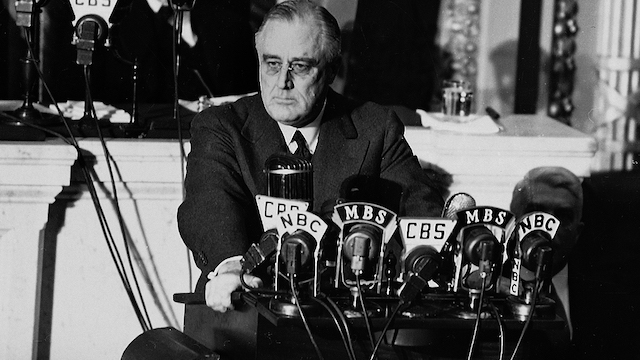
The Four Freedoms: Franklin D. Roosevelt’s Vision for the World

marydilip.info – On January 6, 1941, President Franklin D. Roosevelt delivered his annual State of the Union address to Congress. It was an address that would resonate far beyond the halls of American politics, shaping not only the future of the United States but also the global vision for a post-war world. At the heart of Roosevelt’s speech were what he called “The Four Freedoms,” a set of fundamental human rights that he believed all people, regardless of nationality, deserved. These freedoms—freedom of speech, freedom of worship, freedom from want, and freedom from fear—became central to Roosevelt’s vision for a world built on peace, security, and human dignity.

This article explores the origins, significance, and enduring legacy of the Four Freedoms, delving into how they encapsulated Roosevelt’s ideals, galvanized support during World War II, and inspired international human rights movements in the decades that followed.

The Context of Roosevelt’s Speech

The Global Situation in 1941

When Franklin D. Roosevelt gave his Four Freedoms speech, the world was already deeply embroiled in the turmoil of World War II. Europe was largely under Nazi occupation, the United Kingdom was enduring relentless bombings by German forces, and authoritarian regimes were rising in various parts of the world, threatening global stability and human rights.

Although the United States had not yet entered the war, Roosevelt knew that the country could not remain isolated from global events for long. He saw the rise of fascism, totalitarianism, and militarism as existential threats not only to world peace but to the values of democracy, freedom, and human dignity that the United States held dear. He believed that the war against these forces of oppression was not just a military conflict but a moral one, with the future of humanity hanging in the balance.

A Call to Action

In his State of the Union address, Roosevelt was not only laying out a framework for American involvement in the war; he was also defining a vision of what the world should look like after the war. His Four Freedoms were meant to serve as a guiding principle for a better world—one where the horrors of war, dictatorship, and economic hardship would be replaced by peace, security, and opportunity.

As Roosevelt famously declared, “In the future days, which we seek to make secure, we look forward to a world founded upon four essential human freedoms.”

The Four Freedoms Defined

1. Freedom of Speech

Roosevelt’s first freedom, freedom of speech, was deeply rooted in the ideals of American democracy. The ability to express one’s opinions without fear of censorship or punishment had been a cornerstone of American life since the drafting of the Constitution. However, in 1941, much of the world was living under regimes where free speech was severely restricted or entirely nonexistent. Totalitarian governments in Europe and Asia silenced dissent, oppressed minority voices, and controlled the media to maintain their grip on power.

Roosevelt envisioned a world where every person, in every corner of the globe, would have the right to speak their mind freely, without fear of retribution. This was not merely a call for political speech but for the broader right to express ideas, beliefs, and information that could foster dialogue, understanding, and progress. Roosevelt’s vision of free speech extended beyond national borders and envisioned a future in which this fundamental right was respected universally.

2. Freedom of Worship

The second freedom, freedom of worship, emphasized the right of individuals to practice their religion without interference or persecution. Roosevelt was deeply aware of the religious intolerance and persecution that was rampant in Nazi-occupied Europe, where Jewish communities were being systematically oppressed, leading to the Holocaust. Elsewhere, authoritarian regimes often sought to suppress or control religious institutions to prevent them from becoming centers of opposition.

Roosevelt’s call for freedom of worship went beyond just tolerance; it was a plea for mutual respect and the recognition of religious diversity as a source of strength. He believed that people should have the right to worship (or not worship) according to their conscience and that governments should not impose any single religion or restrict the practice of others. This freedom was a fundamental part of his vision for a pluralistic, democratic society where religious freedom was a core component of human rights.

3. Freedom from Want

Roosevelt’s third freedom, freedom from want, addressed the economic aspect of human rights. The Great Depression, which Roosevelt had faced head-on as president, had revealed the devastating effects of poverty, unemployment, and economic inequality. Millions of people across the globe were living in desperate conditions, and in many countries, social and economic justice seemed like an unattainable dream.

Roosevelt believed that true freedom could not exist in the absence of economic security. Freedom from want meant ensuring that every person had access to basic necessities—food, clothing, shelter, and the opportunity to earn a living. Roosevelt’s New Deal policies at home, which aimed to reduce poverty and provide social security, were reflective of this principle, and he wanted to extend these ideas to the global stage. Roosevelt envisioned a post-war world where no one would suffer from hunger or homelessness, and where nations worked together to alleviate poverty and ensure prosperity for all.

4. Freedom from Fear

The final freedom, freedom from fear, reflected Roosevelt’s desire for a world free from the threat of aggression and violence. At the time of his speech, much of Europe and Asia was living in fear of military occupation, war, and dictatorship. The rise of fascist regimes and the growing militarism of nations like Nazi Germany, Italy, and Japan had brought the world to the brink of destruction.

Roosevelt’s vision for freedom from fear was a call for disarmament, international cooperation, and the prevention of future conflicts. He hoped for a world where nations would resolve their differences through diplomacy, rather than through war, and where people would no longer live in constant fear of violence, whether from their own governments or from external threats. This freedom also emphasized the importance of creating a system of collective security that would ensure peace and stability for all nations.

The Impact of the Four Freedoms During World War II

Mobilizing American Support for the War

Roosevelt’s articulation of the Four Freedoms was a pivotal moment in shaping public opinion in the United States. Although the country had not yet entered World War II, Roosevelt was preparing the American people for the inevitable involvement. By framing the war as a struggle for fundamental human rights, he was able to rally support not just for the defense of American interests but for the defense of universal values.

The Four Freedoms helped to shift the narrative from a narrow, nationalistic view of the war to one that encompassed the global fight for democracy, human rights, and freedom from oppression. This vision resonated with many Americans, who saw the war as an opportunity to build a better world, free from the scourge of tyranny and fear.

The Atlantic Charter

The Four Freedoms also had a profound influence on international diplomacy. In August 1941, Roosevelt met with British Prime Minister Winston Churchill off the coast of Newfoundland to draft what would become known as the Atlantic Charter. This document outlined the shared goals of the United States and the United Kingdom for the post-war world and incorporated many of the ideals that Roosevelt had expressed in his Four Freedoms speech.

The Atlantic Charter called for self-determination, free trade, disarmament, and the establishment of a system of collective security to prevent future wars. It became a foundational document for the Allied war effort and would later serve as a blueprint for the formation of the United Nations.

The Legacy of the Four Freedoms

The United Nations and Human Rights

Perhaps the most enduring legacy of the Four Freedoms is their influence on the creation of the United Nations and the development of international human rights law. In the aftermath of World War II, world leaders recognized the need for a new global organization that could promote peace, security, and cooperation among nations. The United Nations was founded in 1945, with the principles of the Four Freedoms serving as a guiding framework for its mission.

Roosevelt’s vision of a world based on fundamental human rights was further enshrined in the Universal Declaration of Human Rights, adopted by the United Nations General Assembly in 1948. The Declaration, which Eleanor Roosevelt—FDR’s widow—played a key role in drafting, echoed many of the ideals expressed in the Four Freedoms speech. It proclaimed the inherent dignity and rights of all human beings and established a global standard for human rights that continues to shape international law and policy today.

Cultural Influence: Norman Rockwell and the Four Freedoms

The Four Freedoms also had a profound cultural impact in the United States. In 1943, the artist Norman Rockwell created a series of paintings inspired by Roosevelt’s Four Freedoms. These iconic images—depicting everyday Americans enjoying the freedoms of speech, worship, from want, and from fear—were published in the popular magazine The Saturday Evening Post and became a major part of the American war effort.

Rockwell’s paintings helped to bring the abstract ideas of the Four Freedoms to life, making them accessible and relatable to the American public. The images were used in government war bond campaigns and became enduring symbols of the values the United States was fighting to protect.

Continuing Relevance in the 21st Century

Roosevelt’s Four Freedoms remain relevant in the 21st century as the world continues to grapple with issues of human rights, economic inequality, and conflict. In an era marked by rising authoritarianism, economic disparity, and global insecurity, the principles Roosevelt articulated in 1941 still resonate. They serve as a reminder that the pursuit of freedom is a continuous struggle, one that requires vigilance, cooperation, and a commitment to the dignity and rights of all people.

Organizations such as Freedom House and the Four Freedoms Foundation continue to promote the ideals Roosevelt championed, and the Four Freedoms themselves are frequently invoked in discussions about human rights, democracy, and global security.

Conclusion

Franklin D. Roosevelt’s Four Freedoms were more than just a rallying cry for the war effort; they were a bold and visionary statement about the kind of world that could emerge from the ashes of global conflict. Roosevelt’s call for freedom of speech, freedom of worship, freedom from want, and freedom from fear continues to inspire movements for human rights and justice worldwide.

As we reflect on Roosevelt’s legacy, it is clear that his Four Freedoms not only helped define the goals of the Allied effort in World War II but also set the stage for the international human rights framework that we take for granted today. Roosevelt’s vision remains as relevant now as it was in 1941, offering a powerful reminder that freedom is not a privilege for the few but a right for all humanity.

NoRA Attal: A Moroccan Beauty Captivating the Fashion World

marydilip.info – NoRA Attal, a Moroccan-French model, has taken the fashion world by storm with her striking beauty and undeniable talent. Her unique blend of Eastern and Western aesthetics has made her a sought-after figure in the industry, gracing the covers of prestigious magazines and walking the runways of the most coveted fashion shows.

A Meteoric Rise to Fame

Discovered at a young age, NoRA’s career quickly took off. Her captivating features, including her piercing eyes and full lips, caught the attention of renowned modeling agencies. With her strong work ethic and dedication, she rapidly ascended the ranks of the fashion industry, becoming a favorite among designers and photographers alike.

A Global Fashion Icon

NoRA’s impact on the fashion world is undeniable. She has walked the runways for some of the most prestigious fashion houses, including Dior, Yves Saint Laurent, and Chanel. Her elegant and confident presence has made her a favorite among designers and photographers alike. She has also graced the covers of renowned fashion magazines, solidifying her status as a global fashion icon.

A Cultural Bridge

NoRA’s Moroccan heritage has played a significant role in shaping her identity and aesthetic. Her connection to her roots is evident in her elegant and sophisticated style, which often incorporates elements of traditional Moroccan fashion. She has become a cultural bridge, connecting the East and West and promoting a deeper understanding and appreciation of diverse cultures.

A Bright Future Ahead

As NoRA continues to climb the ranks of the fashion industry, her future looks incredibly promising. With her talent, beauty, and unwavering determination, she is poised to become one of the most influential models of her generation. Her journey is a testament to the power of hard work, perseverance, and self-belief.

The Delightful World of Chè: Vietnamese Sweet Desserts

marydilip.info – Vietnamese cuisine is renowned for its vibrant flavors and fresh ingredients, and its desserts are no exception. Among these sweet treats, “chè” holds a special place in the hearts of those with a sweet tooth. Chè is a broad category of Vietnamese sweet desserts that are as diverse as they are delicious. From silky puddings to refreshing jellies, chè offers a delightful exploration of textures and tastes. Let’s dive into the world of chè and discover what makes these desserts so special.

What is Chè?

Chè refers to a wide range of traditional Vietnamese sweet soups, puddings, and drinks. These desserts are typically made with a combination of ingredients like beans, tapioca, jelly, and fruit, often cooked in coconut milk or sugar syrup. Chè can be served hot or cold, making it a versatile treat suitable for any season. The beauty of chè lies in its adaptability; each region in Vietnam has its own unique take on these desserts, using local ingredients and techniques to create an array of flavors.

Popular Varieties of Chè

1. Chè Ba Màu (Three-Color Dessert)

This visually stunning dessert is as delicious as it is beautiful. Chè Ba Màu consists of three layers, each with a different color and texture. Usually, it includes a green layer of pandan jelly, a white layer of coconut milk, and a red layer of sweetened azuki beans. Served in a tall glass, this dessert is both a feast for the eyes and the palate.

2. Chè Đậu Xanh (Mung Bean Dessert)

Mung beans are a staple in many Vietnamese desserts, and Chè Đậu Xanh is a perfect example. This dessert features mung beans cooked until soft and sweetened, often combined with coconut milk for a creamy texture. It can be served hot or cold, making it a comforting treat during cooler months and a refreshing dessert in the summer.

3. Chè Chuối (Banana and Tapioca Dessert)

Chè Chuối combines ripe bananas with tapioca pearls and coconut milk, creating a luscious and aromatic dessert. The bananas are gently cooked in coconut milk, allowing their natural sweetness to shine. The tapioca adds a chewy texture that contrasts beautifully with the softness of the bananas. This dessert is best enjoyed warm, making it a popular choice during the cooler evenings.

4. Chè Bắp (Corn Dessert)

Chè Bắp highlights the natural sweetness of fresh corn, which is cooked with sugar and coconut milk. The result is a creamy and slightly chewy dessert that is both satisfying and comforting. Chè Bắp is often garnished with roasted sesame seeds or crushed peanuts for added flavor and texture.

The Cultural Significance of Chè

Chè is more than just a dessert; it is a symbol of Vietnamese hospitality and culture. These desserts are often shared among family and friends during gatherings and celebrations. The preparation of chè is a cherished tradition, passed down through generations, with each family adding their own unique twist. Whether enjoyed as a street food snack or a homemade treat, chè brings people together, offering a sweet taste of Vietnamese heritage.

Conclusion

Chè is a testament to the creativity and diversity of Vietnamese cuisine. With its wide range of flavors and textures, there is a chè to suit every taste. Whether you’re a fan of creamy coconut milk, chewy tapioca, or sweet tropical fruits, chè offers a delightful experience for dessert lovers everywhere. So next time you have a craving for something sweet, consider exploring the colorful and flavorful world of Vietnamese chè.